domingo, 28 de novembro de 2010

Palestinian girl fights life-threatening condition


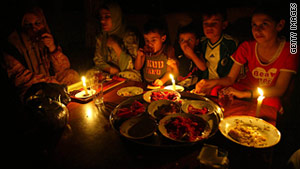
(CNN) -- The second Aya abu Mouwais opens her eyes she starts crying. The three-year-old is in pain every waking moment and has been for two years.
She is suffering from oxalosis, a condition which occurs when the kidneys fail. Doctors in Israel say if the Palestinian girl doesn't have a liver and kidney transplant she could die within months.
Aya's mother Suhair wakes her gently. The pain in Suhair's eyes is clear with each of her daughter's sobs.
"It is so hard for me to see her like this," she said. Aya also has a broken arm, the dialysis she needs five days a week has made her bones brittle.
At sunrise, they leave their house in a northern West Bank village. The dialysis Aya needs is not available in any Palestinian hospital so Aya's father, Iyad, drives his wife and child to the border between the West Bank and Israel.
"This is very difficult, this is my child, my daughter," he said. "I drive them as far as the checkpoint then go home because we have other children to look after, two in school and two still toddlers".
Suhair said: "I have an eight-month-old baby. I have to leave him everyday. Imagine how difficult that is for him and for me". CNN

EU leaders announce $113 billion bailout package for Ireland


(CNN) -- European Union finance ministers on Sunday agreed on an 85 billion euro (U.S. $113 billion) bailout package for Ireland.
The announcement comes a day after protesters snarled the streets of Dublin. Irish Prime Minister Brian Cowen requested the loan last Sunday after days of insisting Ireland did not need help.
The three-year, joint IMF and euro-zone loan was offered as a way to stabilize financial markets in the region.
The loan is to be used to immediately strengthen Ireland's banking system, and to allow the country to undertake ambitious fiscal adjustment, including deficit reduction, said Jean-Claude Juncker, chairman of the Eurogroup said. Another condition of the loan is that Ireland tackle labor reform, he said.
Of the 85 billion euros, 10 billion will be made available for immediate recapitalization. Another 35 billion will be destined for banking system support, and the remaining 50 billion for the country's budget needs. CNN

Federer overcomes Nadal in London final


(CNN) -- Roger Federer maintained his indoor supremacy over top-ranked Rafael Nadal as he won the season-ending ATP World Tour Finals event for the fifth time in his career on Sunday.
Nadal held a 14-7 career record over his longtime rival before the final, but the Spaniard slumped to his third successive indoor defeat to the Swiss player despite battling back strongly in the second set in London.
Federer claimed his 66th career title and the $1.63 million first prize with a 6-3 3-6 6-1 success in the tournament's first final played between the world's top-two players in 24 years.
Both players went into the match on the back of four successive victories, with Federer not having lost a set.
The 29-year-old, who lost his No. 1 ranking again to Nadal this year, won the first set in just 32 minutes after breaking his opponent in the eighth game and then serving out to love. CNN

China proposes 'six-party talks' meeting amid Korean tensions


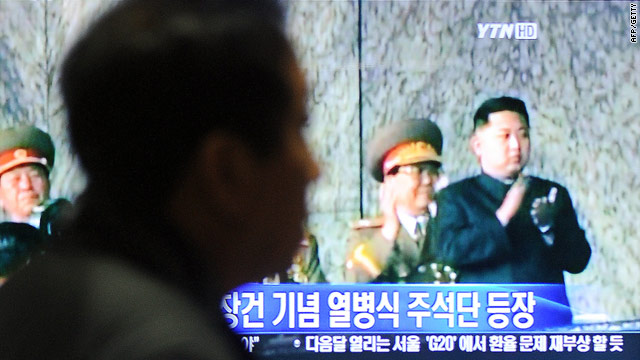
(CNN) -- As both North Korea's largest trading partner and a country engaged in diplomatic talks with South Korea, China is dealing with both sides of an increasingly divided Korean peninsula.
China is proposing to convene an emergency consultation with members of the six-party talks amid growing tensions on the Korean peninsula, a Chinese official said Sunday.
"The Chinese side, after careful studies, proposes to have emergency consultations among the heads of delegation to the six-party talks in early December in Beijing to exchange views on major issues of concern to the parties at present," Wu Dawei, Chinese special representative for Korean peninsula affairs, told journalists.
"The six-party talks play an important role in strengthening communication among the parties, advancing denuclearization on the peninsula and safeguarding peace and stability on the peninsula and in northeast Asia," he said. CNN

Marquez calls out Pacquiao for rematch


(CNN) -- Mexican boxer Juan Manuel Marquez wants a third clash with Manny Pacquiao following Saturday night's successful defense of his WBA and WBO lightweight titles.
The 37-year-old stopped Australia's Michael Katsidis on a technical knockout in the ninth round in Las Vegas to take his record to 52-5 with 38 KOs.
The only draw of his career came against Pacquiao in 2004 when he retained his WBA and IBF featherweight titles, but he lost his WBC super featherweight belt in a controversial split decision to the Filipino in 2008.
"We know that Pacquiao has been avoiding us. We will put a lot of work into it, and a third fight is what the public wants to see," Marquez told reporters after beating Katsidis, whose brother Stathi -- a horse-racing jockey -- died last month. CNN

U.S. fears Iran can strike Europe

WASHINGTON, Nov. 28 (UPI) -- The United States believes Iran has received missiles from North Korea that can strike Western Europe, cables revealed Sunday by WikiLeaks indicate.

The documents also show that Arab states are demanding action to stop Iran just as much as Israel is, The New York Times reported.

The king of Bahrain, who hosts the U.S. 5th Fleet, is quoted telling the Americans the Iranian nuclear program "must be stopped".

"The danger of letting it go on is greater than the danger of stopping it," he said.

And King Abdallah of Saudi Arabia repeatedly begged Washington to "cut off the head of the snake" while there was still time, according to another cable.

When President Barack Obama took office, allies feared his policy of engagement would make him look weak to Iran. But the cables show that his aides countered with a plan to encircle Iran with economic sanctions and anti-missile defenses.

As part of that effort, the Americans prodded the Saudis to offer China a steady oil supply to free it from dependence on Iran. The Saudis agreed, provided China joins the sanctions. UPI

Leaks detail spy orders to U.S. diplomats

WASHINGTON, Nov. 28 (UPI) -- American diplomats' double role as spies is expanding, cables revealed Sunday by WikiLeaks show.

The WikiLeaks revelations include orders for State Department personnel to collect such data as credit card and frequent-flier numbers, work schedules and personal information from foreign officials overseas and at the United Nations, The New York Times reported Sunday.

The directives, going back to the Bush administration in 2008, seem to blur the lines between diplomacy and espionage.

The cables tell State employees how they can fulfill the demands of "human intelligence collection" in specific countries.

One asks officers overseas to gather information about "office and organizational titles; names, position titles and other information on business cards; numbers of telephones, cellphones, pagers and faxes," as well as "Internet and Intranet 'handles,' Internet e-mail addresses, Web site identification URLs; credit card account numbers; frequent-flier account numbers; work schedules, and other relevant biographical information".

The cables, sent to embassies in the Middle East, Eastern Europe, Latin America and the U.S. Mission to the United Nations, do not show that diplomats are attempting to steal secrets. However, the highly personal information could be used by the National Security Agency for data mining and surveillance. UPI

Times explains decision to publish leaks

NEW YORK, Nov. 28 (UPI) -- The New York Times said Sunday it is publishing secret documents from WikiLeaks because they "serve an important public interest".

In a statement released as it began reporting the information, the newspaper said the diplomatic cables show "the goals, successes, compromises and frustrations of American diplomacy in a way that other accounts cannot match".

The Times said it "has taken care to exclude … information that would endanger confidential informants or compromise national security".

The paper said it showed the cables it plans to print to the government and dropped some, but not all, when officials objected.

It said its policy is not to "reveal operational intelligence that might be useful to adversaries in war" or "material that might lead terrorists to unsecured weapons material, compromise intelligence-gathering programs aimed at hostile countries, or disclose information about the capabilities of American weapons".

The Times said it will post on its Web site "the text of about 100 cables -- some edited, some in full". UPI

WikiLeaks says its site is under attack

LONDON, Nov. 28 (UPI) -- Wikileaks said it was under cyberattack Sunday as it released more the 250,000 U.S. diplomatic cables.

The self-described international whistle-blower stated on its Twitter feed, "We are currently under a mass distributed denial of service attack," The Sunday Telegraph reported.

Such an attack is meant to make a Web site unavailable to users, normally by flooding it with requests for data.

The site said the sabotage would not stop the news organizations it had given the material to from publishing. They are El Pais in Spain, Le Monde in France, Der Spiegel in Germany, The Guardian in Britain and The New York Times in the United States.

The reported cyber interference came after the United States warned WikiLeaks Editor in Chief Julian Assange that publishing the papers would be illegal and endanger peoples' lives. UPI

WikiLeaks reports may endanger U.S. ties

WASHINGTON, Nov. 28 (UPI) -- WikiLeaks released more than 250,000 U.S. diplomatic cables Sunday, setting off multiple bombshells affecting relations with many countries.

Among the sensational revelations are claims that Arab states privately want the United States to attack Iran and that the Americans are planning to spy on U.N. leaders, reported The Guardian, one of the media outlets that received the cables.

On another highly sensitive issue revealed in the cables, the United States has been trying to remove highly enriched uranium from a Pakistani research reactor, The New York Times reported.

In May 2009, Ambassador Anne Patterson reported Pakistan was refusing a visit by American experts because it could be portrayed as the United States taking Pakistan's nuclear weapons.

According to Der Spiegel, another recipient of the leaks, a State Department official said President Barack Obama "prefers to look East rather than West," and "has no feelings for Europe".

Relations with one of the closest U.S. allies, Britain, may be damaged by criticisms of Prime Minister David Cameron and requests for specific intelligence about individual Parliament members, The Guardian said.

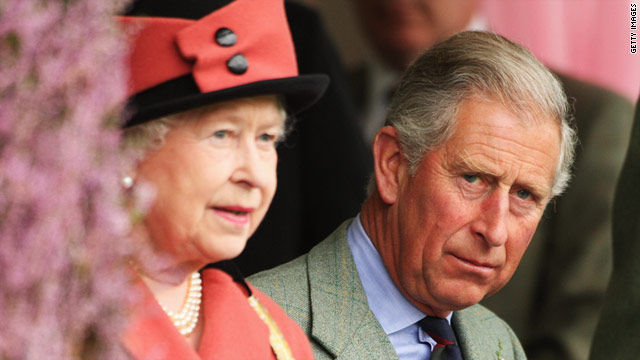
 There are also charges of inappropriate behavior by a member of the royal family.

The cables also reveal U.S. offers to several countries of favors or aid in return for taking Guantanamo Bay prisoners and discussion of scenarios for a collapse of North Korea and China's reaction, the Times said.

Secretary of State Hillary Clinton spent the weekend trying to contain the damage, The Guardian said, calling leaders in Germany, Saudi Arabia, the Persian Gulf, France and Afghanistan.

U.S. ambassadors were briefing their host country leaders in advance of the embarrassing revelations.

It will be hard to convince contacts around the world that future conversations will be kept secret.

State Department legal adviser Harold Hongju Koh sent a letter to WikiLeaks founder Julian Assange and his lawyer in London Saturday, CNN and The Washington Post reported.

"If any of the materials you intend to publish were provided by any government officials, or any intermediary without proper authorization, they were provided in violation of U.S. law and without regard for the grave consequences of this action," the letter said. "As long as WikiLeaks holds such material, the violation of the law is ongoing". UPI

WikiLeaks attacked by hackers ahead of document dump

Whistleblower website WikiLeaks on Sunday came under cyber attack ahead of a release of a new trench of secret U.S. documents.
Information about the attack appeared on the twitter account of WikiLeaks.
"We are currently under a mass distributed denial of service attack," the whistleblower twitted to its followers.
"El Pais, Le Monde, Speigel, Guardian & NYT will publish many US embassy cables tonight, even if WikiLeaks goes down," the site said in a follow-up tweet.
WikiLeaks, which has published hundreds of U.S. war logs, has announced a pending release of the U.S. Department of State's secret correspondence, a Russian business daily said on Friday.
Kommersant daily said that WikiLeaks was preparing to unveil messages between the U.S. State Department and U.S. embassies around the world, including in Moscow.
The documents contain the U.S. evaluation of the political situation in Russia and the unflattering characteristics of some Russian leaders, Kommersant cited a WikiLeaks source as saying.
On Wednesday, U.S. State Department's Assistant Secretary Philip Crowley said that the possible release would "put national interests at risk".
U.S. Secretary of State Hillary Clinton and her deputies started calling to world governments, Kommersant said.
"These revelations are harmful to the United States and our interests. They are going to create tension in our relationships between our diplomats and our friends around the world," Crowley said, adding that the United States was prepared for the worst outcome.
Rusian Reporter weekly is the only Russian magazine, along with U.S. and German media, which received WikiLeaks materials in advance to prepare publications and alalysis, Rusian Reporter said on its web site.
The main suspect in the leak of these documents, along with the previous logs, is jailed U.S. Private Bradley Manning, who had top-secret clearance as an intelligence analyst for the Army when he was stationed in Iraq.
Pentagon investigators believe that Manning has accessed a worldwide military classified Internet and e-mail system to download the documents.
Manning, 22, was charged in June with several violations of the U.S. Criminal Code for allegedly transferring classified data without authorization.
The WikiLeaks website does not have a central office or any paid staff and its operations are run only by a small dedicated team and some 800 volunteers.
Wikileaks' founder, Australian activist Julian Assange, has no home address but he often pops up in Sweden and Iceland, where Internet anonymity is protected by laws. He is being hunted by Pentagon investigators and is suspected of releasing confidential U.S. State Department documents. RIA Novosti

Euro-2012 mascots arrive in Kiev

The mascots for the Euro-2012 football championship have arrived in Kiev with a two-day visit, a Ukrainian TV channel said on Sunday.
Like Euro-2008 co-hosted by Austria and Switzerland which had their twins Trix and Flix, the 2012 mascot features twins, each decked out in a football kit - white and red for Poland, blue and yellow for Ukraine. The names of the twins will be chosen by fans from all over the world in an open vote. The result will be announced on December 4.
The twin bothers have visited the center of Kiev and took part in a photo shoot with children and their parrents.
The joint bid by Poland and Ukraine was chosen by the UEFA's Executive Committee on April 18, 2007 in Cardiff, Wales, defeating the other shortlisted bids from Italy and Croatia/Hungary. The Poland/Ukraine bid received a total of eight votes and Italy received the remaining four while the Croatia/Hungary bid failed to win a single vote. RIA Novosti

Wikileaks release of embassy cables reveals US concerns


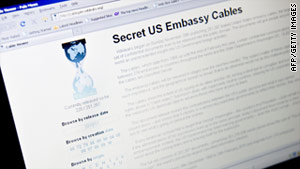
Whistle-blowing website Wikileaks has released 250,000 secret messages sent by US embassies which give an insight into current American global concerns.
They include reports of some Arab leaders - including Saudi Arabia's King Abdullah - urging the US to attack Iran and end its nuclear weapons programme.
Other concerns include the security of Pakistani nuclear material that could be used to make an atomic weapon.
The widespread use of hacking by the Chinese government is also reported.
The leaked US embassy cables also reportedly include accounts of:
  • Iran attempting to adapt North Korean rockets for use as long-range missiles
  • Corruption within the Afghan government, with concerns heightened when a senior official was found to be carrying more than $50m in cash on a foreign trip
  • Bargaining to empty the Guantanamo Bay prison camp - including Slovenian diplomats being told to take in a freed prisoner if they wanted to secure a meeting with President Barack Obama
  • US officials being instructed to spy on the UN's leadership
  • The very close relationship between Russian PM Vladimir Putin and his Italian counterpart Silvio Berlusconi
  • Alleged links between the Russian government and organised crime
  • Criticism of UK politicians including Prime Minister David Cameron
  • Faltering US attempts to prevent Syria from supplying arms to Hezbollah in Lebanon.
  • The US government has condemned the release of state department documents.
    "President Obama supports responsible, accountable, and open government at home and around the world, but this reckless and dangerous action runs counter to that goal," a White House statement said.
    "We condemn in the strongest terms the unauthorised disclosure of classified documents and sensitive national security information".
    The founder of Wikileaks, Julian Assange, says the US authorities are afraid of being held to account.
    Earlier, Wikileaks said it had come under attack from a computer-hacking operation.
    "We are currently under a mass distributed denial of service attack," it reported on its Twitter feed.
    No-one has been charged with passing the diplomatic files to the website but suspicion has fallen on US Army private Bradley Manning, an intelligence analyst arrested in Iraq in June and charged over an earlier leak of classified US documents to Mr Assange's organisation.
    Wikileaks argues that the site's previous releases shed light on the wars in Afghanistan and Iraq. BBC News

La mayor filtración de la historia deja al descubierto los secretos de la política exterior de EE UU

EL PAÍS, en colaboración con otros diarios de Europa y Estados Unidos, revela a partir de hoy el contenido de la mayor filtración de documentos secretos a la que jamás se haya tenido acceso en toda la historia. Se trata de una colección de más de 250.000 mensajes del Departamento de Estado de Estados Unidos, obtenidos por la página digital Wikileaks, en los que se descubren episodios inéditos ocurridos en los puntos más conflictivos del mundo, así como otros muchos sucesos y datos de gran relevancia que desnudan por completo la política exterior norteamericana, sacan a la luz sus mecanismos y sus fuentes, dejan en evidencia sus debilidades y obsesiones, y en conjunto facilitan la comprensión por parte de los ciudadanos de las circunstancias en las que se desarrolla el lado oscuro de las relaciones internacionales.


Estos documentos recogen comentarios e informes elaborados por funcionarios estadounidenses, con un lenguaje muy franco, sobre personalidades de todo mundo, desvelan los contenidos de entrevistas del más alto nivel, descubren desconocidas actividades de espionaje y exponen con detalle las opiniones vertidas y datos aportados por diferentes fuentes en conversaciones con embajadores norteamericanos o personal diplomático de esa nación en numerosos países, incluido España.
Queda en evidencia, por ejemplo, la sospecha norteamericana de que la política rusa está en manos de Vladimir Putin, a quien se juzga como un político de corte autoritario cuyo estilo personal machista le permite conectar perfectamente con Silvio Berlusconi. Del primer ministro italiano se detallan sus "fiestas salvajes" y se expone la desconfianza profunda que despierta en Washington. Tampoco muestra la diplomacia estadounidense un gran aprecio por el presidente francés, Nicolas Sarkozy, a quien se sigue con gran meticulosidad acerca de cualquier movimiento para obstaculizar la política exterior de Estados Unidos.
Los cables prueban la intensa actividad de ese país para bloquear a Irán, el enorme juego que se desarrolla en torno a China, cuyo predominio en Asia se da casi por aceptado, o los esfuerzos por cortejar a países de América Latina para aislar al venezolano Hugo Chávez.
En ocasiones, las expresiones usadas en estos documentos son de tal naturaleza que pueden dinamitar las relaciones de Estados Unidos con algunos de sus principales aliados; en otras, pueden ponerse en riesgo algunos proyectos importantes de su política exterior, como el acercamiento a Rusia o el apoyo de ciertos Gobiernos árabes.
El alcance de estas revelaciones es de tal calibre que, seguramente, se podrá hablar de un antes y un después en lo que respecta a los hábitos diplomáticos. Esta filtración puede acabar con una era de la política exterior: los métodos tradicionales de comunicación y las prácticas empleadas para la consecución de información quedan en entredicho a partir de ahora.
Todos los servicios diplomáticos del mundo, y especialmente de Estados Unidos, donde esta filtración se suma a otras anteriores de menor trascendencia con papeles relativos a Irak y Afganistán, tendrán que replantearse desde este momento su modo de operar y, probablemente, modificar profundamente sus prácticas.
Intensas gestiones
Tratando de anticiparse a ese perjuicio, la Administración de Estados Unidos lleva varios días, desde que supo la existencia de esta fuga de documentos, realizando intensas gestiones ante el Congreso norteamericano y los Gobiernos de gran parte de las naciones ante los que tiene representación diplomática para informarles sobre el previsible contenido de las filtraciones y sus posibles consecuencias. El Departamento de Estado envió a principio de esta semana un informe a los principales comités de la Cámara de Representantes y del Senado previniéndoles sobre la situación.
La propia secretaria de Estado, Hillary Clinton, ha telefoneado en las últimas horas a los Gobiernos de los países más importante afectados por esta fuga de información, entre otros los de China, Alemania, Francia y Arabia Saudí, para alertarles de lo sucedido y ofrecer algunas justificaciones
En Reino Unido, Israel, Italia, Australia y Canadá, entre otros socios de Estados Unidos, portavoces de sus respectivos ministerios de Relaciones Exteriores confirmaron que habían recibido información de parte de los embajadores norteamericanos, aunque no revelaron detalles sobre los datos precisos que habían sido puestos en su conocimiento. No ha habido, sin embargo, comunicación directa entre la Embajada en Madrid y el Gobierno español acerca de este asunto.
El portavoz del Departamento de Estado, P. J. Crowley, ha reconocido que no conoce con exactitud las informaciones que aparecerán en los papeles filtrados, aunque ha adelantado que "estas revelaciones son dañinas para los intereses de Estados Unidos". "Van a crear tensiones entre nuestros diplomáticos y nuestros amigos alrededor del mundo", declaró este fin de semana.
El Departamento de Estado, que ha negociado con uno de los periódicos que hoy publican los cables algunos contenidos particularmente lesivos para sus intereses o peligrosos para ciertas personas, está especialmente preocupado por el daño que esto puede causar en la guerra contra Al Qaeda en algunas regiones en la que la libran de forma encubierta, como Yemen o Pakistán, así como los efectos que puede tener para las difíciles relaciones con otras potencias, como Rusia y China.
Los dos últimos años
Los documentos -251.287 mensajes que cubren un periodo hasta febrero de 2010 y, en su mayor parte, afectan a los dos últimos años- fueron facilitados por WikiLeaks hace varias semanas, además de a EL PAÍS, a los diarios The Guardian, de Reino Unido; The New York Times, de Estados Unidos; Le Monde, de Francia, y al semanario Der Spiegel,de Alemania. Estos medios han trabajado por separado en la valoración y selección del material, y pondrán a disposición de sus lectores aquellas historias que cada uno considere de mayor interés; en algunos casos serán coincidentes, en otros no.
Ese proceso se ha llevado a cabo bajo una exigente condición de no poner en peligro en ningún momento fuentes protegidas de antemano o personas cuya vida podría verse amenazada al desvelarse su identidad. Al mismo tiempo, todos los medios han hecho un esfuerzo supremo por evitar la revelación de episodios que pudieran suponer un riesgo para la seguridad de cualquier país, particularmente de Estados Unidos, el más expuesto por estas revelaciones. Por esa razón, algunos de los documentos que serán puestos a disposición de nuestros lectores a partir de hoy aparecerán parcialmente mutilados.
EL PAÍS no ha estado en el origen de la filtración y, por tanto, desconoce los criterios con los que se ha llevado a cabo la selección del paquete que finalmente ha llegado a manos del diario. Resulta evidente que los papeles analizados no son todos los emitidos en el mundo por el Departamento de Estado en el periodo de tiempo comprendido, pero ignoramos si esos son todos a los que ha tenido acceso WikiLeaks.
Pese a eso, el lector comprobará el valor que en sí mismo encierra el conjunto de documentos facilitados, al margen de que puedan existir otros muchos que aún se desconocen. Se trata de un material que aporta novedades relevantes sobre el manejo de asuntos de gran repercusión mundial, como el programa nuclear de Irán, las tensiones en Oriente Próximo, las guerras de Irak y Afganistán y otros conflictos en Asia y África.
Terrorismo y radicalismo islámico
También se recogen los movimientos entre Estados Unidos y sus aliados para hacer frente al terrorismo y al radicalismo islámico, así como detalles reveladores sobre episodios de tanta trascendencia como el boicot de China a la empresa Google o los negocios conjuntos de Putin y Berlusconi en el sector del petróleo. De especial interés son las pruebas que se aportan sobre el alcance de la corrupción a escala planetaria y las permanentes presiones que se ejercen sobre los diferentes Gobiernos, desde Brasil a Turquía, para favorecer los intereses comerciales o militares de Estados Unidos.
Entre los primeros documentos que hoy se hacen públicos, se descubre el pánico que los planes armamentísticos de Irán, incluido su programa nuclear, despiertan entre los países árabes, hasta el punto de que alguno de sus gobernantes llega a sugerir que es preferible una guerra convencional hoy que un Irán nuclear mañana. Se aprecia la enorme preocupación con la que Estados Unidos observa la evolución de los acontecimientos en Turquía y la estrecha vigilancia a la que se mantiene al primer ministro, Erdogan.
Y, sobre todo, esta primera entrega revela las instrucciones que el Departamento de Estado ha cursado a sus diplomáticos en Naciones Unidas y en algunos países para desarrollar una verdadera labor de espionaje sobre el secretario general de la ONU, sus principales oficinas y sus más delicadas misiones.
Los lectores descubrirán al acceder a las sucesivas crónicas detalles insospechados sobre la personalidad de algunos destacados dirigentes y comprobarán el papel que desempeñan las más íntimas facetas humanas en las relaciones políticas. Eso resulta particularmente evidente en América Latina, donde se dan a conocer juicios de diplomáticos norteamericanos y de muchos de sus interlocutores sobre el carácter, las aficiones y los pecados de las figuras más controvertidas.
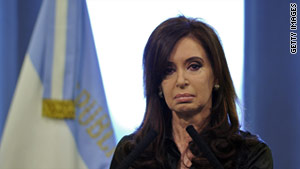
Mañana EL PAÍS ofrecerá detalles, por ejemplo, sobre las sospechas que la presidenta de Argentina, Cristina Fernández de Kirchner, despierta en Washington, hasta el punto de que la Secretaría de Estado llega a solicitar información sobre su estado de salud mental. El mismo día se darán a conocer algunas de las gestiones que la diplomacia norteamericana ha realizado para repatriar a los presos de Guantánamo, así como la intensa actividad en Asia para frenar el peligro que representa Corea del Norte.
Cables controvertidos
Entre los cables con los que ha trabajado este periódico se encuentran informes extraordinariamente controvertidos, como los mensajes del embajador norteamericano en Trípoli en los que cuenta que el líder libio, Muamar el Gadafi, usa botox y es un verdadero hipocondríaco que hace filmar todos sus exámenes médicos para analizarlos posteriormente con sus doctores, y relatos con meticulosas descripciones del paisaje local, como el que hace un diplomático estadounidense invitado a una boda en Daguestán que sirve para ilustrar el grado de corrupción en la zona.
Hay cables de gran valor histórico, como el que revela la apuesta de la diplomacia norteamericana por el derrocamiento del general panameño Manuel Antonio Noriega o el que detalla ciertos movimientos de Estados Unidos durante el golpe de Estado que destituyó a Manuel Zelaya en Honduras, y cables de enorme interés sobre acontecimientos actuales, como el que precisa la presión ejercida sobre el presidente de Afganistán, Hamid Karzai, para que contenga los abusos de sus allegados y facilite la gobernabilidad del país.
En lo que respecta a España, estos documentos registran el enorme acceso de la Embajada de Estados Unidos a personalidades destacadas del ámbito político y judicial, y su influencia en algunos acontecimientos que han marcado la actualidad de los últimos años. También se descubre el punto de vista que funcionarios estadounidenses tienen de la clase política española, así como el que algunos políticos expresan sobre sus compañeros y adversarios.
En determinados casos, estas revelaciones tienen el estrictamente el valor que tiene la opinión de una persona de posición influyente. En otros casos, se trata de relatos que aportan pistas sobre acontecimientos importantes pero que son narrados por una sola fuente: el servicio diplomático de Estados Unidos. EL PAÍS no ha podido corroborar todos esos relatos y ha prescindido de algunos que ha considerado de dudosa credibilidad. Pero sí ha certificado otros y ha operado de forma responsable con el país objeto de la filtración con la intención de causar el menor daño posible. Entre otras precauciones, se ha decidido aceptar los compromisos a los que The New York Timesllegue con el Departamento de Estado para evitar la difusión de determinados documentos.
No todos los papeles obtenidos por Wikileaks han sido utilizados para la elaboración de nuestras informaciones, y solo una parte de ellos serán expuestos públicamente, independientemente de lo que la propia WikiLeaks o los demás medios que han recibido el material decidan hacer. Se han seleccionado tan solo aquellos que consideramos imprescindibles para respaldar la información ofrecida.
Las informaciones han sido preparadas y escritas únicamente por redactores de nuestro periódico atendiendo a nuestras particulares exigencias de rigor y calidad. A lo largo de varios días se irán ofreciendo las crónicas que recogen la sustancia de esos documentos, añadiéndoles el contexto y la valoración requeridos, así como sus posibles reacciones y consecuencias.
Algunas de esas reacciones estarán, seguramente, dirigidas a examinar las causas por las que puede haberse producido una fuga de semejante magnitud. El origen de este problema puede remontarse a los días posteriores al ataque terrorista del 11 de septiembre de 2001, cuando se detectaron unos fallos de coordinación entre los servicios de inteligencia que recomendaron la necesidad de un modelo de comunicación que permitiera a los diferentes responsables de la seguridad compartir datos extraídos por el Departamento de Estado.
Un sistema de Internet del Ejército
Se extendió, por tanto, a partir de esa fecha el uso de un sistema de Internet del Ejército norteamericano denominado SIPRNET, un acrónimo de Secret Internet Protocol Router Network. Todos los cables que se incluyen en esta filtración fueron enviados por ese medio, como se comprueba por la etiqueta que cada uno de ellos lleva en su cabecera, la palabra SIPDIS, que son las siglas para Secret Internet Protocol Distribution.
Al menos 180 embajadas norteamericanas alrededor del mundo utilizan actualmente ese sistema de comunicación, según informes elaborados por el Congreso norteamericano. Aunque se exigen fuertes medidas de seguridad para el uso de ese sistema, como la de mantenerlo abierto únicamente cuando el usuario está frente a la pantalla, la exigencia de cambiar la clave cada cinco meses o la prohibición de utilizar cualquier clase de CD u otro método de copia de contenidos, el número de personas que ahora acceden a la información ha crecido considerablemente.
A ese crecimiento ha ayudado también la necesidad de ampliar el número de personas trabajando en cuestiones de seguridad y, como consecuencia, la del número de personas a la que se da acceso a documentos clasificados. El Departamento de Estado clasifica sus informes en una escala que va del Top Secret al Confidential. En los documentos facilitados a EL PAÍS no hay ninguno clasificado como Top Secret, aunque sí más de 15.000 situados en la escala inferior, Secret.
Según se puede deducir de datos elaborados por la Oficina de Control del Gobierno, perteneciente al Congreso norteamericano, y otros expuestos recientemente por medios de comunicación de ese país, más de tres millones de estadounidenses están autorizados al acceso a ese material Secret. Eso incluye decenas de miles de empleados del Departamento de Estado, funcionarios de la CIA, del FBI, de la DEA, de los servicios de inteligencia de las fuerzas armadas y de otros departamentos implicados en la búsqueda de información. En Estados Unidos funcionan 16 agencias con responsabilidades de espionaje.
Será muy costoso, por tanto, para ese país reparar el daño causado por esta filtración, y llevará años poner en pie un nuevo sistema de comunicación con plenas garantías. Lo más importante, sin embargo, es el valor informativo que esos documentos tienen actualmente. Estamos ante una serie de relatos, sin precedentes en el periodismo español, que servirán para una mejor comprensión de algunos conflictos y de personalidades que afectan determinantemente a nuestra vida y que pueden abrir a nuestros lectores a una nueva interpretación de la realidad que les rodea. El País

luishipolito@outlook.com

Carregando...