quinta-feira, 10 de fevereiro de 2011

EEUU califica de 'lenta' e 'inadecuada' la lucha de México contra el narcotráfico

Las capacidades de las Fuerzas Armadas y de la Policía de México siguen siendo "inadecuadas" para combatir a los carteles de la droga y "contener la violencia criminal", dijo este jueves ante el Congreso el director nacional de Inteligencia, James Clapper.
Durante una audiencia sobre las amenazas contra la seguridad nacional de EEUU, Clapper afirmó que, si bien México ha registrado "resultados sólidos" en la lucha contra las drogas, también afronta "enormes retos".
"Pese a los logros, las capacidades militares y policiales de México, en general, siguen siendo inadecuadas para desmantelar a las organizaciones de narcotráfico y contener la violencia criminal", destacó Clapper en su informe anual sobre las amenazas contra intereses de EEUU en todo el mundo.
Clapper señaló que el proceso de reformas institucionales para fortalecer el Estado de derecho emprendido por el presidente Felipe Calderón "es lento debido a la limitación de recursos, prioridades políticas contrapuestas y resistencia burocrática".
Por otra parte, el director nacional de Inteligencia (DNI) dijo que las autoridades de EEUU no ven "indicios de que los líderes del narcotráfico hayan decidido atacar de forma sistemática a funcionarios estadounidenses en México como parte de su estrategia".
El informe de Clapper destacó que el "esfuerzo ambicioso" de Calderón contra los narcotraficantes, ahora en su quinto año, ha logrado "unos éxitos importantes pero afronta enormes retos".
Desde 2009, las autoridades de México han logrado el arresto o dieron muerte a cuatro de los ocho principales cabecillas del narcotráfico. La confiscación de 134 toneladas de marihuana en octubre de 2010 es una de las mayores hasta la fecha, según el informe de Clapper.
Al inicio de la audiencia, el demócrata de mayor rango en el Comité, Dutch Ruppersberger, dijo que así como Estados Unidos invierte muchos recursos en Oriente Próximo, también debe "incrementar el apoyo a México" porque la situación de seguridad en ese país tiene un "efecto directo" en EEUU. El Mundo

Colombia extradita a siete presuntos narcotraficantes a Estados Unidos

El Gobierno colombiano extraditó el jueves a Estados Unidos a siete presuntos narcotraficantes, entre ellos uno implicado en el contrabando de miles de armas chinas en alianza con la guerrilla de las FARC, todos miembros de las denominadas nuevas bandas criminales.
El jefe de la Dirección de Investigación Criminal (Dijin), general de la Policía Carlos Ramiro Mena, informó en una rueda de prensa de que los colombianos están acusados de narcotráfico y lavado de dinero y fueron entregados al Departamento Estadounidense Antidrogas (DEA).
Entre los extraditados figura Jorge Alberto Rengifo, alias "Cacerolo", implicado en la negociación de más de 4.000 fusiles Norinco (de fabricación china) dirigidos a grupos armados ilegales, según las autoridades colombianas.
Las armas, según Mena, fueron gestionadas en una "alianza criminal"entre la banda de "Los Comba" y el frente 30 de las Fuerzas Armadas Revolucionarias de Colombia (FARC), que se moviliza por el suroeste del país.
En el desarrollo de la investigación de este caso, la Dijin decomisó unos 1.000 fusiles AK-47 y M4, agregó el jefe policial.
Otro extraditado es Orlando Prieto Gómez, considerado como el "coordinador de pilotos de la mafia" que servían a varias bandas.
Entre los entregados a la DEA está Lupe Alejandra Vélez Ramos, de la banda de Los Paisas, considerada el brazo armado de la llamada "Oficina de Envigado", grupo dedicado al ajuste de cuentas y conformado por narcotraficantes que era liderado por un líder paramilitar extraditado a EEUU en 2008.
Mena dijo que cuatro de los extraditados pertenecían a la banda de Los Rastrojos, dos a la de Los Paisas y uno al Ejército Popular Antiterrorista de Colombia (Erpac).
Las autoridades colombianas dieron a estos grupos el nombre genérico de "bandas criminales" o "bacrim", pero para analistas y organizaciones internacionales como Human Rights Watch se trata de herederos de las antiguas Autodefensas Unidas de Colombia (AUC), los paramilitares que se desmovilizaron en 2006.
El Gobierno considera que estas bandas son ahora la principal amenaza a la seguridad en Colombia y que en muchos casos actúan en alianza con las guerrillas de las FARC y del Ejército de Liberación Nacional (ELN). El Mundo

Report: Iran blocks reformist sites, detains opposition figures


(CNN) -- Iranian authorities have blocked reformist websites and detained several opposition supporters and activists, opposition website Saham News reported Thursday.
The arrests come days after Iran's two leading opposition figures called for a rally next Monday in support of the uprisings in North Africa and the Middle East.
Iranian authorities on Wednesday warned against any attempt by the opposition movement to hold the rally, according to the state-run Islamic Republic News Agency.
"We definitely see them as enemies of the revolution and spies, and we will confront them with force," Revolutionary Guard Cmdr. Hossein Hamedani told IRNA.
Opposition leaders and former presidential candidates Mir Hossein Moussavi and Mehdhi Karrubi requested permission to hold the rally earlier this week, according to Saham News, Karrubi's website.
It was unclear whether the government has denied the request.
Those detained, according to the Thursday report on Saham News, include Saleh Noghrekar, the former head of Moussavi's election campaign and the nephew of Karrubi's wife. Agents detained Noghrekar early Thursday and spent four hours searching his home, the website said.
Also detained were journalists Omid Mohaddess and Maysam Mohammadi, both arrested Wednesday night; Tahgi Rahmani, Karrubi's assistant, also arrested Wednesday night; and Dr. Mohammad Hossein Sharif-Zadegan, former minister of welfare under former reformist President Mohammad Khatami.
The Saham News report didn't specify what reformist websites authorities had blocked.
On Wednesday, Iran's top prosecutor dismissed the call for the rally as a ploy by the opposition movement to undermine the regime, according to the semiofficial Iranian Student's News Agency, or ISNA. Gholam Hossein Mohseni-Ejei said that if Iranians want to support the people of Egypt and Tunisia, they will attend the government-sanctioned rally on Friday to commemorate the 32nd anniversary of the Islamic revolution.
Members of Iran's government have expressed strong support for the uprising in Egypt. Supreme Leader Ayatollah Ali Khamenei called it an "Islamic awakening" against a U.S.-backed dictatorship.
"If they are not going to allow their own people to protest, it goes against everything they are saying, and all they are doing to welcome the protests in Egypt is fake," Karrubi told The New York Times on Tuesday.
Moussavi and Karrubi asked that the rally take place in Tehran's Azadi Square, the site of mass protests by Iran's opposition movement after the disputed 2009 presidential elections.
For nearly eight months, supporters of Iran's so-called Green Movement chose major calendar days to protest in cities throughout the country. Many of the movement's grievances were identical to those now being expressed in the streets of Cairo.
Protesters condemned what they called an oppressive regime, demanded political and social freedom and called for a more representative government.
Iran eventually quelled the demonstrations with a brutal crackdown against the peaceful street protests and the arrests of hundreds of activists, reformists and opposition figures, some of whom remain behind bars.
Since the unrest, Iranian authorities have rejected all requests by Iran's opposition movement for peaceful demonstrations.
On Tuesday, Karrubi told The New York Times the protest will be a test for the opposition Green Movement.
"If the government issues a permit, there will be a huge demonstration and it will show how alive the Green Movement is," he said. While public activism took a hit after the crackdown, he said, members of the movement are still working toward rights such as free elections, freedom of assembly and freedom of speech.
In September, Karrubi's website reported a group of attackers entered the opposition leader's apartment building and beat the head of a security team protecting Karrubi. The attackers shot at the building, cut water pipes to the apartment and tried to cut power on the street, the website said.
It identified the attackers as members of the Basij, militia who support Khamenei, and said Karrubi's apartment had been attacked on four consecutive nights.
Karrubi's son, Mohammad Taghi Karrubi, told CNN he was inside the apartment when about 20 Basij broke into the courtyard of the complex and fired shots, set small fires in the courtyard and the lobby and vandalized parts of the building.
"They called the police; nobody came," he said. CNN

Rio doubles dividend and unveils $5bn buy-back


Rio Tinto will buy back $5bn of shares, underlining the extent of its cash accumulation after a year when soaring iron ore prices allowed it to slash its debt and more than double its profits.
The multinational mining company boosted its 2010 dividend by 20 per cent to $1.08 per share and said it would buy back $5bn in shares before the end of 2012. These rewards come less than two years after it asked investors for a $15.2bn cash infusion through its 2009 rights issue.
Its dramatic change in fortune derives from the market prices of iron ore, copper, coal, and aluminium. Like peer miners it is enjoying what one analyst called "Boom 2.0", a sharp resurgence of China-led demand for the raw materials of industrialisation.
Higher commodities prices alone added $9.5bn to underlying earnings which more than doubled from $6.3bn to $14bn.
Iron ore once again delivered the majority of profits, as Rio continues an extraordinarily lucrative business of digging up the steelmaking ore from its mines in the Australian desert and shipping it north to China. The iron ore division accounted for $16.6bn out of a total $26.6bn of group earnings before interest taxation depreciation and amortisation. Ebitda rose 84 per cent compared to 2009.
Profits from aluminium did not compare to iron ore. But a significant turnaround occurred at the formerly loss-making division previously known as Alcan, the Canadian aluminium giant that Rio bought for $38bn in 2007. Alcan's earnings before interest taxation depreciation and amortisation jumped from $594m to $2.4bn.
Once again the pricing effect accounted for most of the gain. Aluminium prices rose 31 per cent over the course of 2010. The metal has taken on a new use as a financial investment that some say is dangerous because its value is tied to low interest rates and the expectation that prices will continue to rise.
Operational cash flows in 2010 rose 70 per cent to $23.5bn.
The wave of cash flooding the mining industry has led many analysts to expect share buybacks from BHP Billiton, the other top Anglo-Australian miner that reports interim results next week. But buybacks at Rio were less widely expected, in part because the company has agreed a $3.9bn acquisition of Riversdale Mining, which owns coal properties in Mozambique.
It is also funding a vast mine-building programme, committing $12bn to new projects since the start of 2010.
But Rio's balance sheet on Thursday indicated a flexibility to pursue several multi-billion-dollar outlays simultaneously. Its net debt, which at the end of 2008 stood at $38.6bn, was $4.3bn at the end of 2010. That compares to $18.9bn last year.
"Rio Tinto is reinvigorated, running strongly, and benefiting from favourable markets," said Tom Albanese, chief executive, in a statement. He noted that the removal of government stimulus spending on infrastructure this year has "the potential to generate both volatility and substantial swings in commodity prices".
The company expects capital expenditure of $13bn in 2011 including construction costs of Oyu Tolgoi, the world-class copper mine that it is building in Mongolia.
Rio's pre-tax profits rose 161 per cent from $7.9bn to $20.6bn, on gross revenues that rose 36 per cent to $60bn. Last year sales to China accounted for 28 per cent of Rio's revenues, a rise from 2009.
The company's bid for Riversdale, which is tightly held by companies including Tata Steel and Brazil's CSN, was extended to March 4.
Earnings per share more than doubled from $2.75 to $7.26.
Rio shares fell 2.5 per cent to £45.41 in midday trading in London. CNN

Mubarak no dimite pero delega poderes en Suleiman

El desengaño que sienten los manifestantes en la Plaza de Tahrir esta noche no debe sorprender a nadie. Desde primera hora de la tarde, lo único que se escuchaba en El Cairo era la noticia de la dimisión inminente del presidente Hosni Mubarak. Tras 30 años de poder absoluto, y más de dos semanas de revueltas populares, parecía que, por fin, Egipto tomaba sus primeros pasos definitivos hacia la transición democrática.
En su esperado discurso de esta noche, Mubarak se ha burlado de todos aquellos que habían pasado la tarde celebrando su partida. Todos esperaban que anunciara el traspaso de sus poderes al recién nombrado vicepresidente -y hombre de confianza de Washington-, Omar Suleiman, y quizá incluso su partida hacia alguna tierra lejana. En vez de ceder a las demandas de los manifestantes, el mandatario ha presentado su lado más desafiante, y ha reiterado su determinación absoluta de mantenerse en el poder hasta la conclusión de su mandato el próximo mes de septiembre.
Partiendo de su autoproclamada posición como "padre" de los "ciudadanos y hijos de Egipto, hombres y mujeres, jóvenes de Egipto en la Plaza de Tahrir", Mubarak se ha dirigido a la nación con un tono firme, incluso a veces severo, y sobre todo serio. "No voy a salir del país en este momento difícil y voy a apoyar a cualquiera que quiera apoyar a Egipto para conseguir nuestros objetivos en medio de una concordia nacional", ha asegurado el 'rais' egipcio.

Reformas constitucionales

El anuncio más anticipado del día -el traspaso de poder a Suleiman- quedó reducido a un breve comentario; Mubarak se limitó a decir que delegaría ciertos poderes en la persona del vicepresidente, sin entrar en mayor detalles.
El mandatario fue más explícito al comprometerse a reformar los problemáticos artículos 76, 77, 88, 93, 179 y 189 de la Constitución.
La mayoría de los artículos que ha mencionado Mubarak tienen que ver con ley electoral y derechos humanos básicos. El artículo 76 limita quien se puede presentar como candidato a la presidencia y, en la práctica, elimina toda posibilidad de que el presidente tenga competición seria en los comicios. El 77 refuerza el poder del presidente al eliminar toda restricción sobre el número de veces que se puede presentar a la reelección.
Los artículos 88 y 93 facilitan elfraude electoral. El primero, introducido en 2007, este artículo eliminó el control judicial sobre las elecciones; el segundo limita las formas en las que se puede cuestionar la legitimidad de los comicios electorales: sólo el Parlamento -con mayoría absoluta del partido de Mubarak- puede poner en duda los resultados.
Quizá el artículo más polémico es el 179: toda persona sospechada de participar en actos terroristas puede ser detenida sin explicación mayor; el presidente tiene derecho a ordenar el juicio de los mismos por tribunal militar (bajo cuyo régimen el acusado deja de tener derecho a representación legal).
El 189, finalmente, asegura el control del presidente sobre todas estas medidas legales al limitar el derecho de proponer enmiendas constitucionales a su persona.

Inepto intento de calmar los ánimos populares

Eso sí, el presidente ha intentado calmar los ánimos de los manifestantes insistiendo en que las elecciones del mes de septiembre serán libres y abiertas: "Se van a facilitar las condiciones de acceso a la candidatura de cualquiera, la justicia verificará el acceso a los parlamentarios para garantizar las libertades de los ciudadanos y poder suspender la ley de emergencia; pero lo primero es recuperar la seguridad entre los egipcios, la confianza en nuestra economía y la seriedad de que el movimiento de cambio no tiene vuelta atrás".
Mubarak ha terminado su discurso asegurando que él también fue un joven y que entiende a la juventud que está pidiendo reformas. "La voluntad de los egipcios, su unidad y nuestra consideración a la Historia de Egipto son la esencia de nuestra existencia desde hace 7.000 años.Viviremos el espíritu de Egipto mientras dure Egipto y su pueblo".

Furia en la Plaza de Tahrir

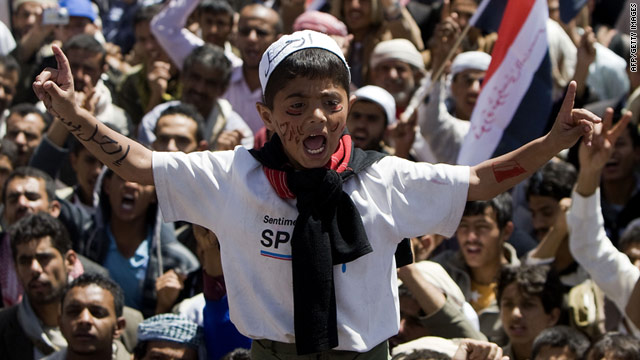
Mientras tanto decenas de miles de manifestantes concentrados en la cairota Plaza de Tahrir han recibido con rabia y tristeza el discurso del presidente egipcio.
La indignación, e incluso los llantos, sucedieron al silencio durante todo el mensaje del mandatario, retransmitido por una gran pantalla colocada en la plaza, epicentro de la revuelta popular.
Los manifestantes siguen pidiendo en la plaza de la Liberación la marcha del rais. "Abajo Mubarak. Fuera, fuera". Muchos agitan sus zapatos, enfurecidos y decepcionados. "Nos habla como si fuéramos idiotas", subrayaba.
Ali Hassan, "Es un general derrotado sobre el campo de batalla, que no se retirará hasta dejar tantas víctimas como sea posible". "Al palacio [presidencial], allí vamos, los mártires por millones", gritan muchos manifestantes. Si la protesta había comenzado esta tarde con calma, ante los rumores de la inminente salida de Mubarak, los eslóganes se han vuelto más y más violentos tras el discurso del rais y de su vicepresidente.
En una intervención televisada tras la comparecencia de Mubarak,Suleiman ha pedido a los manifestantes que se vayan a casa. "Ni Mubarak ni Suleiman", respondían los manifestantes en Tahrir. "Omar Suleiman y Mubarak son lo mismo. Son dos caras de la misma moneda. Nuestra primera petición es que se marche. Si no se va, yo no me marcharé", decía Rahman Gamal, un trabajador de supermercado de 30 años apostado en Tahrir. El Mundo

Violência na Costa do Marfim deixou quase 300 mortos, diz ONU

Ao menos 296 pessoas já morreram devido à turbulência pós-eleitoral na Costa do Marfim desde meados de dezembro, disse a missão da ONU (Organização das Nações Unidas) nesta quinta-feira.

A comunidade internacional aponta o oposicionista Alassane Ouattara como vencedor da eleição de 28 de novembro, mas o presidente Laurent Gbagbo se recusa a deixar o cargo, e continua controlando as Forças Armadas.

Confrontos entre seguidores de Ouattara e as forças de segurança deixaram um grande número de vítimas, a maioria em incursões de tropas e milícias aliadas do presidente contra bairros habitados por simpatizantes da oposição. A ONU diz também que muitas pessoas foram sequestradas nessas incursões.

Apenas na semana passada, 22 pessoas morreram em Abidjã, a maior cidade da Costa do Marfim, segundo nota da ONU.

"Isso eleva o total de mortos a mais de 296 desde meados de dezembro", disse o porta-voz Hamadoun Touré, acrescentando que a cifra não inclui as vítimas de sequestros e estupros.

Paramilitares leais a Gbagbo mataram pelo menos seis civis na segunda-feira em um reduto de Ouattara, segundo testemunhas. E no fim de semana passado Gbagbo comandou uma cerimônia pelos 32 policiais e soldados mortos desde meados de dezembro, quando a situação se tornou violenta.

As forças do governo raramente divulgam sobre números de vítimas e costumam proibir o acesso da imprensa e do público aos locais onde ocorrem incidentes violentos, até que os corpos sejam retirados. REUTERS Folha Online

Em discurso na TV, Mubarak diz que fica no poder até setembro

No esperado pronunciamento desta quinta-feira, o ditador egípcio, Hosni Mubarak, rejeitou a influência de outros países em acontecimentos políticos em seu país, e prometeu fazer uma transição democrática até setembro deste ano.

"Não vou deixar-me influenciar por demandas ou ingerências de outros países", disse ele. 

"Começamos um diálogo nacional construtivo, e isto resultou em harmonia para que consigamos avançar a um cronograma e para que implementemos uma transição democrática até setembro". Folha Online

U.S. Special Forces strained, Mullen says

WASHINGTON, Feb. 10 (UPI) -- Enduring engagements and economic constraints mean U.S. Special Forces might have to adjust their mentality for future combat, the top U.S. military chief said.

U.S. Navy Adm. Mike Mullen, chairman of the Joint Chiefs of Staff, said at a defense symposium on Special Operations Forces in Washington that elite military units were under a lot of strain.

He said that with Special Forces winding down their mission in Iraq and entering their 10th year in Afghanistan, there were questions emerging on durability.

"How long can we do it?" he asked. "Somehow we've got to figure out how to create a little more balance as we look to the future".

The top U.S. military commander added that the military must now figure out how to continue working with less money.

"At some point in time -- and I certainly don't speak to the wars that we're in, because we can't back off there -- but at some point in time, we have to ask ourselves, 'What are we going to stop doing?'" he was quoted by the Defense Department as saying.

Navy Adm. Eric Olson, commander of U.S. Special Operations Command, said at the same conference that demands were increasing on elite forces.

"We are, frankly, beginning to show some fraying around the edges," he said. UPI

Mo. woman faces 'cyberbullying' charge

ST. LOUIS, Feb. 10 (UPI) -- A Missouri judge says a woman accused of cyberharassment against a teenager will be tried, denying a motion to dismiss the felony charge.

Elizabeth Thrasher, 41, is the first defendant in St. Charles County to face a felony charge as a result of a law passed in 2008 following the suicide of Megan Meier, 13, the St. Louis (Mo.) Post-Dispatch reported Wednesday.

Meier was the victim of a MySpace hoax masterminded in part by an adult neighbor in a case that made international headlines.

Thrasher's attorney, Michael Kielty, had asked St. Charles County Circuit Judge Ted House to dismiss the charge, arguing the new law is unconstitutionally vague and violates free-speech rights.

Kielty has not disputed the basic allegations of the charge, involving a cyberspat between Thrasher and the 17-year-old daughter of her ex-husband's girlfriend.

When the daughter sent Thrasher an obscenity-laden text message telling her to "grow up," Thrasher retaliated in May 2009 by putting the teenager's photo, workplace, e-mail address and cellphone number on a section of Craigslist for people seeking sexual encounters.

The daughter received calls, e-mails, texts and pornography, authorities said.

Thrasher's actions were a "sophomoric joke," not a crime, Kielty said.

The charge is a felony because Thrasher was 21 or older and the victim was 17 or younger, the Post-Dispatch said. UPI

Pakistan and India agree to resume peace talks


(CNN) -- Pakistan and India have agreed to resume peace talks that broke down after the Mumbai terror attacks in 2008, government ministries said Thursday.
"(Pakistani) Prime Minister Syed Yusuf Raza Gilani has expressed his satisfaction on the important decision taken both by Pakistan and India to resume full spectrum of dialogue," said a statement from Pakistan's foreign ministry.
An announcement from India's external affairs ministry said the foreign minister of Pakistan will visit India by July to "review progress in the dialogue process". Dates for the talks have not yet been set.
The decision to resume peace talks came during weekend meetings in Bhutan between the foreign secretaries of each nation.
"I value this development and pay my compliments and good wishes to (Indian Prime Minister) Dr. Manmohan Singh," Gilani said.
Nirupama Rao, India's foreign secretary, said the talks will focus on a range of issues, such as terrorism and humanitarian, economic and water-related matters.
"There are no overnight solutions and we need time, we need patience to resolve many of these issues. So we're not raising high expectations," she told CNN Thursday. "We're not setting overambitious objectives. But this is a re-engagement, and we have to hope for the best".
Under U.S. pressure, leaders from the nuclear neighbors held several meetings last year in a bid to restart the peace process, but no dramatic headway had been made until recently in resolving outstanding issues.
The two countries have fought three wars since independence from Britain in 1947. The Himalayan territory of Kashmir -- claimed by both -- has been the cause of two of those conflicts.
In 2004, India and Pakistan agreed to a peace process that covers eight issues, including Kashmir, terrorism and Pakistan's concerns over river dams on the Indian side, which it sees as a threat to its water supplies.
Successive governments on both sides have held talks in an attempt to end their historical acrimony.
Singh and Pakistan's President Asif Ali Zardari hailed results from the negotiations in September 2008 as the countries completed four rounds of diplomatic meetings.
But talks were suspended two months later, in November, 2008, after the terror raid on Mumbai. CNN

Suicide bomber kills 8, injures 30 pilgrims in Iraq, officials say


(CNN) -- A suicide bomber drove into a rest tent for Shiite pilgrims in Iraq Thursday, killing eight people and injuring 30 others, police officials in Samarra said.
The attack occured at 2 p.m. in Al-Dujail, 50 miles north of Baghdad, the officials said.
The victims were among thousands of Shiite pilgrims headed to Samarra Saturday to commemorate the death of Imam al-Askri, who died in 874 A.D and is buried at a mosque there. CNN

Middle East turmoil threatens vicious economic cycle


(CNN) -- The turmoil that's roiled Arab states from Tunisia to Yemen is also creating a headache for those entrusted with reviving economies hard hit by rising energy and food prices, growing public debt and the prospect of more expensive borrowing on the international markets.
Since mid-January, credit rating agencies such as Moody's have downgraded the sovereign debt of Tunisia, Jordan and Egypt. On Tuesday Moody's changed the outlook on Jordan's foreign currency bonds to negative from stable, citing "fiscal and economic downside risks related to ongoing turmoil in the region following events in Tunisia and Egypt".
Moody's said that Jordanian protesters "could use the regional uprisings as an opportunity to express their discontent about high unemployment and the lack of development for low-income groups". Standard & Poor's, another major credit rating agency, made a similar move.
Jordanian officials are not happy with the downgrade, arguing that their public finances are sound -- Jordan's foreign currency reserves actually rose last year and stand at about $12 billion -- and that the economy may grow as much as 6% in 2011. Protests there have been largely peaceful and far smaller than in Egypt and Tunisia. But after pledging to cut the budget deficit, the government reversed course in January with a package of subsidies and salary increases amounting to some $600 million, to compensate for higher prices. International bond markets are wary that governments may try to "buy their way" out of trouble, in the words of one analyst.
It is a potentially toxic cycle, according to regional economists. Egypt and Tunisia have already suffered a loss of tourism revenue in peak season, while record-high grain prices and a surge in the price of crude oil have fueled inflation. Jordan imports 90 per cent of its oil, and faces disruption to its gas supplies after an explosion at a pipeline in Egypt last week.
Like Jordan, Egypt has opted to spend more on subsidies for the poor. The recent street protests, now in their third week, have led stores, businesses, the stock market and banks to close -- a further cost. Until the protests erupted, Egypt had a positive reputation in the international debt markets -- with attractive interest rates for investors, banks that had avoided high-risk investments, a manageable budget deficit and low overall sovereign debt.
Like Jordan, it was working to cut its budget deficit. But markets abhor uncertainty and the government's cost of borrowing has risen sharply since the protest movement erupted -- although it has fallen back slightly in recent days. Earlier this week, the Egyptian Central Bank intervened to support the pound against the dollar, spending precious foreign currency in the process. And before the Egyptian stock market closed, some $5 billion was wiped off the value of Egyptian stocks in just two days.
In addition, government wages and pensions in Egypt have been increased 15 per cent. Credit strategists say any labor unrest -- especially at the Suez Canal where a strike began among service workers Wednesday -- would put Egypt's finances under further pressure. Shipping has so far been unaffected by the labor action.
Market commentators say that international investors are already avoiding Egyptian Treasury auctions -- another is due next week -- meaning local banks are expected to pick up the slack.
One former Jordanian official told CNN that he hoped the country's vulnerable economic state and its value to the United States as a reliable pro-Western ally would prompt greater financial support from Washington. Last year, foreign grants -- mainly from the United States and Saudi Arabia -- totaled more than $400 million. But there is pressure on the U.S. federal budget too. CNN

Egypt death toll may be underestimated, activists say


(CNN) -- The number of people killed in Egypt's protests against President Hosni Mubarak could be two or even three times higher than previously estimated, a human rights activist on the ground warned Thursday.
Human Rights Watch has confirmed about 300 deaths, said Hossam Bahgat of the Egyptian Initiative for Personal Rights. But independent researchers have not been able to get information from many places, he said.
"We can definitely say that the most conservative number is 300. It could be twice or three times, if not more," he said.
Human rights activists have been visiting hospitals and morgues to try to get an accurate count, especially after a particularly brutal round of violence January 28-29, he said.
But there are many places where they have not been able to reach or where they found officials unwilling to give them information, he said.
Tom Porteous of Human Rights Watch advised against focusing exclusively on the number killed.
"A death toll by itself does not give an indication of the abuses that took place," he said in the same briefing. "The number of people who died from close-range shooting is an indication that there is a need for investigation". CNN

luishipolito@outlook.com

Carregando...