President Bashar al-Assad has told parliament Syria will defeat those behind a "plot" against his country.
"Syria is a target of a big plot from outside," he said in his first speech since anti-government demonstrations erupted two weeks ago.
Mr Assad said he would continue on the path of reform for Syria - but did not announce the lifting of a state of emergency, as some had predicted.
Later, there were reports of protests and gunfire in the city of Latakia.
Reuters reports that hundreds of people chanting "freedom" had taken to the streets of Latakia, and that troops had fired warning shots in an attempt to get them to disperse.
There were also reports of more protests in the southern city of Deraa, where more than 60 people have been killed in unrest during the last two weeks.
In a speech interrupted several times by pledges of support, Mr Assad told parliament that people had been "duped" to go into the streets.
"Deraa is in the heart of every Syrian," Mr Assad said. It was on the front line of Syria's enemy, Israel, he added. BBC News
Japan is to decommission four stricken reactors at the quake-hit Fukushima nuclear plant, the operator says.
Tokyo Electric Power (Tepco) made the announcement three weeks after failing to bring reactors 1 - 4 under control. Locals would be consulted on reactors 5 and 6, which were shut down safely.
Harmful levels of radioactivity have been detected in the area.
More than 11,000 people are known to have been killed by the devastating 11 March earthquake and tsunami.
Emperor Akihito visited a centre for earthquake and tsunami victims in the Tokyo area on Wednesday.
Rolling blackouts
The emperor's visit "gives me strength" said one of the evacuees.
Japanese experts are considering whether to cover the reactor buildings at the Fukushima Daiichi plant with a special material, to stop the spread of radioactive substances, Chief Cabinet Secretary Yukio Edano says.
On Wednesday, the government ordered nuclear power plant operators to start implementing new safety measures immediately.
The steps - to be completed by the end of April - include preparing back-up power in case of loss of power supply.
Fire trucks will be on standby to intervene and ensure cooling systems for both reactors and pools of used fuel are maintained.
Minister of Economy, Trade and Industry Banri Kaieda said this did not mean that nuclear plant operations should be halted.
Tepco's president Masataka Shimizu has been admitted to hospital, suffering from high blood pressure and dizziness.
Hours later, Tepco chairman Tsunehisa Katsumata spoke to reporters for the first time.
He admitted that the company had not been able to cool the reactors, and pledged maximum efforts to stabilise them. And he added that reactors 1-4 would eventually have to be shut down for good.
Mr Katsumata said his company was preparing to compensate those suffering damage caused by radiation leaks.
The chairman also apologised for the inconvenience caused by the rolling blackouts imposed to cope with power shortages.
The earthquake and tsunami damaged the nuclear plant's power supply, leading to a failure of the cooling systems.
Since then engineers have been using seawater to cool down the core of the reactors, but the operation has failed to stop radioactive leaks.
Japan's Prime Minister Naoto Kan has said the country is on "maximum alert".
Tepco has been accused of a lack of transparency and failing to provide information promptly. BBC News
Italian PM Silvio Berlusconi has promised that the island of Lampedusa will soon be free of migrants.
Thousands of people have arrived on the island south of Sicily since January, travelling from Tunisia and Libya.
Officials say sanitary conditions have become "desperate" and islanders have staged protests at the town hall.
On a visit to the island, Mr Berlusconi announced to a crowd that in "48 to 60 hours Lampedusa will be inhabited only by Lampedusans".
About 20,000 migrants have crossed the Mediterranean since the upheavals in North Africa and the Middle East began in January.
Emergency
Some 6,000 migrants - more than the total population of the island - are now living there in makeshift camps.
There were no new arrivals on Tuesday night, Italian media reported, the first night with no new immigrants for some time.
On Wednesday morning, five ships arrived, sent by the Italian government to Lampedusa to take migrants to camps on the mainland. One of the ships was the naval vessel San Marco and the rest were civilian ferries, reports said. Another boat was expected later.
Mr Berlusconi's plane arrived on the island shortly after 1300 local time.
After meeting the regional governor and mayor of Lampedusa, he addressed a crowd of islanders outside the town hall, promising a series of measures including tax breaks and welfare benefits.
He also said there would be a plan to relaunch Lampedusa's tourist industry, which has been badly hit by the influx from North Africa.
The previous evening, he had described the immigrants arriving on Lampedusa as "poor wretches" fleeing a world without freedom and democracy.
Although most of the immigrants on the island are expected to be transferred to Sicily or camps on mainland Italy, negotiations are said to be under way to repatriate a number of people to Tunisia.
Most of the arrivals since January have sailed from Tunisia, but in recent days boats have come from Libya as well.
'Nobel peace prize'
To cheers from the crowd, Mr Berlusconi announced that he had bought a house on the island and even suggested that he would nominate Lampedusa for the Nobel peace prize.
"I will become Lampedusan," he said. The Ansa news agency reported that he later went to visit the villa in question.
Angrier words came from Italy's Foreign Minister Franco Frattini, who complained about the handling of the crisis by the EU and France.
"Europe has been absolutely inactive on this," he told SkyTG24 TV, adding that "very limited funds" had been forthcoming from Brussels.
An EU spokesman responded, saying that 18m euros (£15.8m, $25m) had been given to Rome for repatriations in the past year, on top of emergency funds handed to all EU member states.
Mr Frattini accused France of a lack of solidarity by sending back Tunisian migrants who had tried to cross the Italian border with France at Ventimiglia.
Hundreds of Tunisians who landed at Lampedusa have moved on to reception centres on the mainland and have then travelled to north-west Italy in an attempt to enter France.
The foreign minister said it was "well known that 80% of those arriving in Lampedusa speak French and maybe have relatives in French cities". BBC News
Brazil has signed an agreement with Bolivia to tackle cocaine production and trafficking in the country.
The deal aims to replace the void when Bolivia expelled the US Drug Enforcement Administration in 2008 for alleged political interference.
Brazil will help train and equip Bolivian security forces, and deploy drone aircraft to patrol the border.
Bolivia is the world's third largest producer of cocaine, and more than half its production goes to Brazil.
The Bolivia-Brazil Action Plan was signed by Brazilian Justice Minister Jose Eduardo Cardozo on a visit to Bolivia.
He said drug trafficking was a "transnational crime" that could only be confronted by international cooperation, involving countries both inside and outside the region.
On Tuesday Mr Cardozo visited a rural area in central Bolivia to see security forces eradicating fields of coca - the raw material for cocaine.
Brazil is a major consumer of cocaine, and drug trafficking gangs are a serious security threat in many Brazilian cities.
Criticism
Bolivian and Brazilian officials said they might to extend the agreement to include Peru - after Colombia the world's second biggest cocaine producer - which also shares a long land border with Brazil.
The deal comes weeks after US and UN reports said Bolivia was not doing enough to tackle cocaine production and trafficking.
Bolivian President Evo Morales rejected those claims, accusing the US of falsely trying to link his government to drug trafficking.
Criticism of Bolivia's anti-drug efforts has been mounting since February, when a former commander of the national anti-narcotics police, Gen Rene Sanabria, was arrested in Panama on charges of drug trafficking.
Mr Morales is himself a former coca grower, and defends the use of the leaf for medicinal and ritual purposes while insisting his government is doing all it can to stop cocaine production. BBC News
(CNN) -- Fraud has forced Haiti's election council to delay results of a highly anticipated runoff intended to decide the next leader of the troubled Caribbean nation.
Results were supposed to have been announced Thursday. But the Provisional Election Council asked for four more days and will post preliminary results on Monday instead. Final results are not expected until April 16.
The agency said that "a high level of fraud and irregularities of various kinds has been detected in the tabulation of votes".
The election pitted former first lady Mirlande Manigat, 70, against bad-boy musician Michel Martelly, 50. The initial election in November ended in controversy when Jude Celestin, the government-backed candidate, placed second after Manigat.
Charges of massive vote-rigging and other irregularities surfaced, and protests erupted for days on the streets of Port-au-Prince and other cities. In January, a vote review disqualified Celestin and prompted the runoff between Manigat and Martelly. Both candidates have expressed confidence in their showing.
The second round of elections unfolded peacefully for the most part amid concerns that the return of former President Jean-Bertrand Aristide, a polarizing figure in Haiti, would disrupt the vote. Aristide arrived in Haiti two days before the runoff but has kept a low profile so far and did not endorse a candidate.
Haiti's next leader will inherit a job laden with challenges as the impoverished country struggles to rebuild after last year's devastating earthquake and a cholera epidemic. CNN
London (CNN) -- Profits before tax at specialist insurance market Lloyd's of London plummeted 43% to £2.2 billion ($3.5 billion) after a series of natural disasters drove up claims, according to its full year results for 2010 released Wednesday.
Earthquakes in Chile and New Zealand, floods in Australia and the Gulf of Mexico oil disaster contributed to the drop in profits, the company said in a statement.
Lloyd's chairman Peter Levene told CNN he did not yet know the full cost of Japan's devastating earthquake and tsunami.
Levene said Japan's crisis would cost the company but "whenever there is a natural disaster that's what we are in business for to help to meet the costs of it, it's going to cost us money, but that's why we are there".
He added: "Are we exposed in Japan? Yes. Is it outside the normal parameters of our business? No".
Lloyd's reported a profit of £3.86 billion for the full year 2009. Lloyd's is the world's leading insurance market, made up of 85 syndicates as at December.
A study from reinsurer Zurich-based Swiss Re revealed Tuesday said economic losses from catastrophes soared to $218 billion last year. The company said the figure was more than triple the $68 billion damage of the previous year.
The cost of the earthquake and tsunami that struck Japan has been estimated at up to $309 billion by Japan's government. CNN
(CNN) -- The United Nations Security Council voted unanimously Wednesday to impose sanctions on disputed Ivory Coast President Laurent Gbagbo, his wife and three associates as well as give U.N. peacekeepers more authority to protect civilians.
The Security Council vote occurred Wednesday amid reports of escalating violence in the west African nation.
Forces loyal to Alassane Ouattara, who is widely recognized as the legitimately elected president of the Ivory Coast, seized control of much of Yamoussoukro, the nation's capital, on Wednesday, according to a spokesman.
The spokesman, Seydoun Ouattara, told Radio-France International Wednesday that forces loyal to disputed President Laurent Gbagbo have fled Yamoussoukro and that opposition forces have taken control of many parts of the city.
The fall of Yamoussoukro and other cities to Ouattara forces have raised fears among Gbagbo supporters of an all-out war advancing to Abdijan, the country's largest city and commercial hub.
Alassane Ouattara's forces have already laid claim this week to key cities and towns in the cocoa-producing west, including Soubre, where residents reported seven hours of heavy fighting.
Ouattara is internationally recognized as the legitimate winner of a November election. But Gbagbo, the incumbent Ouattara defeated, has refused to give up power.
The U.N. Security Council resolution restates a demand that Gbagbo step down immediately. It also authorizes U.N. peacekeepers "to use all necessary means to carry out its mandate to protect civilians under imminent threat of violence".
The resolution also imposes targeted sanctions and travel restrictions against Gbagbo, his wife Simone, Desire Tagro, Pascal Affi N'Guessan and Alcide Djedje.
Simone Gbagbo, along with being the nation's disputed first lady, chairs the Parliamentary Group of the Ivorian Popular Front. Tagro, is secretary general in the administration of "the so-called 'presidency' of Mr. Gbagbo," the resolution states. N'Guessan is charman of the Ivorian Popular Front. Djedje is a close advisor of Gbagbo.
The resolution accuses all five of "obstruction to the peace and reconciliation process" and of rejecting the legitimate election of Ouattara. All but Laurent Gbagbo are accused of "public incitement to hatred and violence".
According to France's Foreign Ministry, forces loyal to Gbagbo opened fire Wednesday on a French Embassy escort car in Abidjan. The ministry, which condemned the act, did not report any casualties.
In recent days, the city of Bondoukou in eastern Ivory Coast fell into the hands of Ouattara supporters. Loyalists of Ouattara say pro-Gbagbo "mercenaries and militias" launched an attack against in the city of Bouna. In response, the fighters pushed the pro-Gbagbo forces back into and out of Bondoukou, in the northeast of the country.
Meanwhile the United Nations reported Monday that one of its helicopters was fired on during a reconnaissance flight. They blamed the attack on Ouattara's Republican Forces. It was unclear why their forces would fire at the U.N.
A spokesman for Gbagbo, Ahoua Don Mello, denied that Ouattara's forces were advancing to Abidjan. He described the fighters as fractured and with no political base.
Nearly 1 million residents have fled Abidjan and others are displaced from their homes elsewhere, according to the United Nations. CNN
Tokyo (CNN) -- Radiation levels in a Japanese town outside a government-ordered evacuation zone have exceeded one of the criteria for evacuation, the International Atomic Energy Agency said Wednesday.
The agency said it advised Japan "to carefully assess the situation".
The elevated levels were found in Iitate, a town of 7,000 residents about 40 kilometers (25 miles) northwest of the earthquake- and tsunami-damaged Fukushima Daiichi nuclear power plant, the agency said. The evacuation zone covers a 20-kilometer (13-mile) radius around the plant.
The agency did not say what levels it found in Iitate, but the environmental group Greenpeace said Sunday it had found radiation levels in the town that were more than 50 times above normal.
Though that is far below the level that would cause radiation sickness, it does pose a risk of cancer to residents in the long term, Greenpeace said. CNN
Buenos Aires, Argentina (CNN) -- Venezuelan President Hugo Chavez was given a prestigious journalism award in Argentina on Tuesday, despite his frequent and outspoken criticism of media outlets at home and abroad.
Chavez received the Rodolfo Walsh journalism award from Argentina's Universidad Nacional de La Plata "for his unquestionable and authentic commitment to support the freedom of peoples".
During a raucous, two-hour acceptance speech in front of hundreds of students and the university's journalism faculty, Chavez accused large media outlets of "manipulation" and said that in Venezuela today, there is "more freedom of expression and the press than any time in our history".
The Rodolfo Walsh award, given to people who advance the cause of press freedom, is named in honor of the late Argentine journalist who was killed in 1977 during Argentina's "Dirty War," when military leaders systematically eliminated dissident voices. Walsh was also a co-founder of Prensa Latina, Cuba's state-run news agency. Past award winners include Argentine journalists Joaquin Morales Sola and Tomas Eloy Martinez as well as Bolivian president Evo Morales, a close ally of Chavez.
Flush with petrodollars, Chavez's government in 2005 helped create Telesur, a state-funded television network that covers news from throughout Latin America and the globe. Telesur has been championed as an alternative voice to privately owned media conglomerates, but also criticized for its one-sided coverage of Chavez. Ironically, at Tuesday's award ceremony, private television networks were prohibited from broadcasting the event with their own cameras and instead had to air the signal provided by Telesur.
Journalists and politicians in Argentina criticized the choice of Chavez as the award recipient, claiming that he has continually worked to silence his critics and suppress freedom of the press throughout Venezuela.
"Chavez has closed more than 30 radio stations and six television channels and constantly threatens to take away broadcast licenses of any media that is at all critical of his administration," said Jorge Macri, a congressman from Buenos Aires province. "That's why I consider it a lack of respect for the people who have received this award previously that it is now being awarded to the Venezuelan president".
The award ceremony in Argentina came two days after protesters prevented trucks carrying Argentina's two largest daily newspapers, Clarin and La Nacion, from leaving the printing press. The action further inflamed an ongoing feud between Argentine President Cristina Fernandez de Kirchner and the Argentine media, which she has accused of unfairly criticizing her administration. Opposition leaders claim that the government authorized the blockade. On Monday, Clarin published a blank white page on its cover to protest the action.
"The Argentine government needs to take immediate measures to sanction this disregard and violation of a judicial ruling that constitutes an attack on freedom of the press," said Claudio Paolillo of the Inter American Press Society.
Earlier Tuesday, Kirchner met with Chavez at the Casa Rosada in Buenos Aires, where they signed a series of economic accords. Kirchner skipped Chavez's award ceremony at the Universidad Nacional de La Plata -- which she and her late husband, former Argentine President Nestor Kirchner, attended in the 1970s -- to meet with U2 frontman Bono, who is in Argentina for three concerts this week. According to a government spokesman, Bono asked Argentina's support in developing medical vaccines to eliminate diseases like malaria and for Kirchner's help in encouraging fellow G-20 leaders to demand that oil and mining companies publicly reveal their financial status. CNN
Cuando a EEUU le tocan a uno de los suyos, es decir, asesinan a uno de sus agentes, la reacción es inmediata y feroz. Lo demostró con la macrorredada porterior al homicidio de su agente de aduanas Jaime Zapata. Y, ahora, a pesar de que México también se apresuró a detener a los presuntos culpables y a exibirlos ante las cámaras, el Gobierno de Barack Obama ha decidido ofrecer la tentadora cifra de cinco millones de dólares para no parar hasta detener a todos los implicados en el crimen.
También México está dispuesto a aflojar el bolsillo con una recompensa a cambio de información veraz que lleve a sumar detenciones en un caso que ya ha llevado a prisión preventiva a 16 supuestos 'zetas'. La Fiscalía mexicana ha anunciado este miércoles un 'premio' más modesto: 10 millones de pesos (unos 836.000 dólares).
Los agentes Jaime Zapata y su compañero Pedro Ávila, que resultó herido en el ataque, fueron víctimas de una emboscada el 15 de febrero pasado mientras se trasladaban en un vehículo oficial del gobierno estadounidense del estado de San Luis Potosí a la Ciudad de México.
Una semana después, el Ejército informó sobre la captura de Julián Zapata Espinoza 'El Piolín', junto con otros cinco integrantes del grupo delictivo de Los Zetas y quienes supuestamente agredieron con armas de fuego a los agentes estadounidenses.
El 28 de febrero pasado, La Secretaría de Marina-Armada de México (Semar) presentó a Sergio Antonio Mora Cortés, alias 'El Toto', cabecilla del cártel de Los Zetas y jefe directo de 'El Piolín', quien también está vinculado con la agresión de los agentes estadounidenses. El Mundo
Llamar "personaje" a Jair Bolsonaro es quedarse corto. Atrincherado en el Congreso brasileño desde hace dos décadas y acostumbrado a disparar verbalmente contra todo lo que se mueve, este militar reciclado en político es quizá el más polémico entre los diputados federales y el único que aún defiende abiertamente la dictadura que gobernó el país desde 1964 hasta 1985. Su última proeza, convertirse en el nombre más comentado en Twitter -incluso por encima del fallecido ex vicepresidente José Alencar- después de esparcir sus pensamientos homofóbicos y racistas ante la audiencia que asistió perpleja esta semana al programa de televisión 'CQC'.
Bolsonaro, de 56 años, fue invitado al espacio 'O povo quer saber' ('El pueblo quiere saber') para responder cerca de una veintena de preguntas formuladas por ciudadanos en la calle. Y ya desde la primera, dejó claro que no pretendía pasar de puntillas por la entrevista.
"¿Quién es su gurú en la política?", se interesó un joven. "Los militares que fueron presidentes de nuestro país", contestó el diputado sin despeinarse.
Era sólo el comienzo de una sucesión de elogios a los dictadores, "personas serias que ejercían la autoridad sin enriquecerse", alternados con tajantes críticas a los gobernantes de la democracia. Tanto a la actual jefa de Estado, Dilma Rousseff, como a sus predecesores Luiz Inácio Lula da Silva y Fernando Henrique Cardoso.
Pero la entrevista no estalló hasta que a uno de los ciudadanos-entrevistadores le dio por abordar la cuestión de la homosexualidad. "¿Qué haría si tuviera un hijo gay?", le interrogó. "Eso ni siquiera pasa por mi cabeza, porque han tenido una buena educación", respondió Bolsonaro.
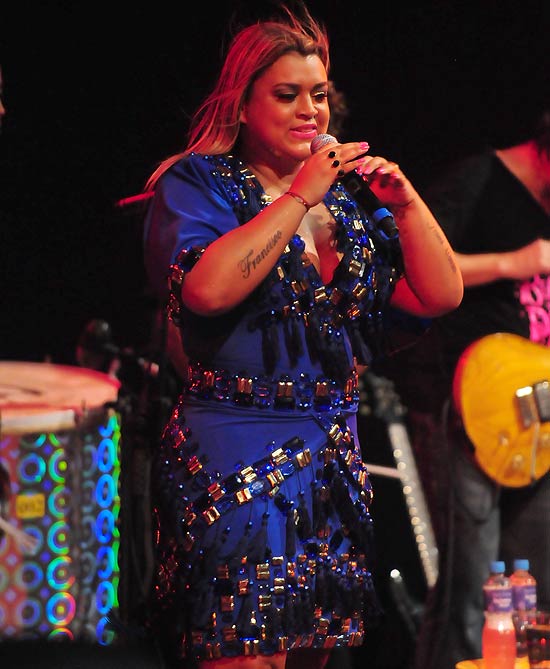
Aún más polémica fue la réplica que soltó a la cantante Preta Gil, hija del ex ministro brasileño Gilberto Gil, cuando quiso curiosear qué haría en caso de que uno de sus hijos se enamorara de una mujer negra. "No voy a discutir la promiscuidad", le dijo el diputado, quizá enredándose con las anteriores preguntas. "No corro ese riesgo y mis hijos han sido muy bien educados. Y no han vivido en ambientes como lamentablemente es el tuyo", agregó, en un comentario que podría referirse a la bisexualidad de la artista o bien a la relación de su familia con las drogas.
La contestación de Bolsonaro no sentó nada bien a Preta Gil, quien a través de su abogado ha puesto en marcha los trámites para denunciarlo por un crimen de intolerancia racial y homofobia. "Soy una mujer negra, fuerte, e iré hasta el final contra ese diputado racista, homófobo y repugnante. Cuento con vuestro apoyo", publicó la artista en su cuenta de Twitter.
Por su parte, el político admitió este martes que se equivocó al mencionar en 'CQC' la promiscuidad porque entendió que se refería al hipotético noviazgo de un hijo suyo "con un gay" y no con una negra. Con todo, no desaprovechó la oportunidad para echar más leña al fuegoarremetiendo de nuevo contra la cantante: "En ese caso, respondería que acepto que mi hijo tenga una relación con cualquier mujer, menos con Preta Gil".
A continuación, la transcripción de la entrevista en español:
P.- ¿Quién es su gurú en la política?
R.- Los militares que fueron presidentes de nuestro país.
P.- ¿Qué piensa de Dilma?
R.- Por su pasado de secuestros, robos... por mí, jamás sería presidenta de la República.
P.- ¿Le daría un beso?
R.- [Risas] No, el beso es para quien se enamora, por amor... Jamás.
P.- ¿Echa de menos a Lula?
R.- No, de ningún modo. Echo de menos a personas serias como [los generales Emilio] Medici, [Ernesto] Geisel, [João] Figueiredo...
P.- ¿Qué es lo que más echa de menos de la dictadura?
R.- El respeto, la familia, la seguridad, el orden público, las autoridades que ejercían la autoridad sin enriquecerse...
P.- Ya que le gusta la dictadura, ¿por qué no se muda a Cuba?
R.- Yo detesto Cuba. Por mí, lógicamente, no existiría el régimen que tenemos en Cuba actualmente.
P.- ¿Está a favor de que Brasil tenga la bomba atómica?
R.- Mire, sólo es respetado quien tiene el poder de intimidar. Si Irán puede tener según Lula, nosotros incluso podríamos caminar hacia eso.
P.- ¿Sigue pensando que FHC [Fernando Henrique Cardoso] debería ser fusilado?
R.- Fue un decir que encajaba en el contexto de la época. Pero, realmente, en lo que se refiere a la privatización de [la compañía minera] Vale do Rio Doce, se comportó como un traidor a la patria.
P.- ¿Por qué cree que los militares ganan poco? Los militares no trabajan...
R.- ¿No trabajan? Usted está en el paseo de [la playa de] Copacabana, los militares están en [las favelas del] Morro do Alemão.
P.- ¿Es así de peleón en casa? ¿Cómo le aguanta su mujer?
R.- Ella, cuando empezó a salir conmigo, se preocupó. Pero después vio que realmente soy una persona excepcional, sin ningún problema, sin violencia...
P.- ¿Qué haría si pillara a su hijo fumando marihuana?
R.- Le daría un mamporro, puede estar seguro.
P.- ¿Lo torturaría?
R.- Si actuar con energía es torturar, ¡será torturado!
P.- ¿Qué haría si tuviera un hijo gay?
R.- Eso ni siquiera pasa por mi cabeza, porque han tenido una buena educación. Fui un padre presente, entonces no corro ese riesgo.
P.- ¿En el Ejército había muchas mariconadas?
R.- En nuestro medio, el porcentaje es pequeño. Pero son tolerados y respetados. Lógicamente, aquel que aparece tiene un tratamiento de acuerdo con la legislación militar.
P.- Para usted, ¿quién es el hombre más guapo de Brasil?
R.- A mí un hombre no me parece guapo. Para mí, todos los hombres son iguales.
P.- Si fuera invitado a salir en un desfile gay, ¿iría?
R.- No iría, porque no participo de promover las malas costumbres. Porque creo en Dios, porque está la familia y la familia tiene que ser preservada a cualquier precio. Si no, la nación simplemente se desmoronará.
P.- ¿Por qué está en contra de las cuotas raciales?
R.- Porque todos somos iguales ante la ley. Yo no entraría en un avión pilotado por un 'cuotista' ni aceptaría ser operado por un médico 'cuotista'.
P.- ¿Cuántos jefes negros ha tenido?
R.- Ni cuento ni le doy bola a eso.
P.- Si su hijo se enamorara de una negra, ¿qué haría?
R.- Mira, Preta [Gil], no voy a discutir la promiscuidad con quien quiera que sea. No corro ese riesgo y mis hijos han sido muy bien educados. Y no han vivido en ambientes como lamentablemente es el tuyo. El Mundo