The investigation into Rachel Baker, who has been convicted of the manslaughter of a care home resident, began after two whistleblowers went to the authorities with concerns about Parkfields. One of them, Sarah Barnett, explains why they did so
Steve Morris
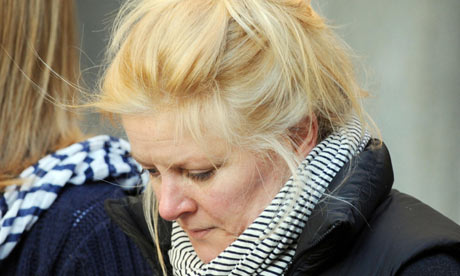
I started working at Parkfields in March 2005. I began to have concerns about the administration of controlled drugs and record keeping. I challenged Rachel about this and her response was, "I am the registered nurse, I give the injections, so I keep the records".
By the summer of 2006 my concerns were growing so when in June I learned there was to be an inspection of the home by the Commission for Social Care Inspection (CSCI) I was relieved.
On returning to work after the inspection I was told that Parkfields had passed. I doubted myself and any worries I had: if a professional body had inspected the home and were happy who was I to disagree?
I became more and more worried about what was happening at Parkfields. This was a residential home, not a hospital or nursing home and we were losing a resident every six weeks – this seemed an incredibly high death rate.
Rachel's behaviour both personally and as a manager became increasingly erratic and unpredictable.
One day, she would be the consummate professional, an asset to the home and another she would be off the wall, shouting screaming and slamming doors. This was intimidating and bizarre. It was hinted to me that Rachel may be reliant on drugs.
My colleague Kathy [Slade] and I met with CSCI and reported our worries and experiences. We didn't do this lightly.
For the past three years we have had to live with the stigma of being "whistleblowers".
We were vilified by the community and colleagues. We had fulfilled our duty of care and yet we were made to feel that we had done something dreadful and underhand.
Who would believe us, even when the police investigation was clearly taking a serious turn, when all they could see was a residential care home in a beautiful countryside village?
We couldn't defend ourselves or explain our actions because what we wanted to say would come up in court as evidence – essentially we were gagged.
Neither of us works in the residential care sector anymore. I could never work in a care home again – there are too many ghosts for me.
There needs to be a national programme of support for any witnesses in our position in the future. Nobody who reports concerns about vulnerable people in care settings should ever be treated again the way Kathy and I have been.
I feel sad, bitter and angry about what happened at Parkfields. I feel that if CSCI had inspected the home professionally in June [2006] lives could have been saved.
I am certain that there were other deaths at the home which Rachel Baker could be responsible for. There was an absolute pattern in their care and deaths.
I am also certain that there are a number of individuals and agencies who should be held accountable for what happened. Vulnerable people were let down.
I feel strongly that there should be a public inquiry. There is so much more to tell and it needs to be heard.
Rachel Baker abused her position of trust. She ceased to be a nurse when she started taking drugs meant for the residents and lying to everyone involved in their care. She was desperate and selfish. Residents who didn't need drugs were being prescribed them and those who did didn't get them.
• CSCI ceased to exist on 31 March 2009, when it was replaced by the Care Quality Commission, as the new regulator for health and social care in England
The Guardian
