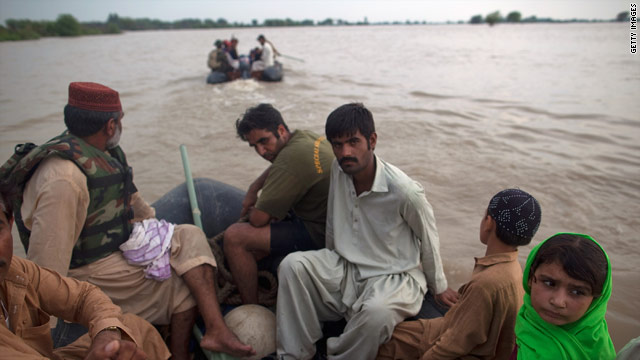
Chachran Sharif, Pakistan (CNN) -- Imam Baksh used two cots as shelter over his head and a third to shield him from the drenched earth.
The 80-year-old man was among thousands in Chachran Sharif who could see his home submerged under water -- about half of the Pakistani town looked more like a lake than a community of people.
Even the mosque was under water and people were using boats to rescue their cows, goats and sheep, dragging the terrified animals onto dry -- or at least dryer -- land.
Chachran Sharif, in Pakistan's Punjab province, is one of many villages, towns and cities across Pakistan reeling from torrential monsoon rain and flooding that authorities now say have affected 12 million people and killed as many as 1,500.
Pakistan's disaster management authority estimated that 650,000 houses have been damaged or destroyed. By comparison, the earthquake of 2005 affected 3.2 million people and damaged or destroyed 611,000 homes.
And no relief is in sight as the bloated Indus River overflows its banks and more rain continues to fall. Pakistan's Meteorological Department issued an alert for the southern province of Sindh, far away from the northern Swat Valley, where the crisis began.
"Pakistan has been hit by the worst flood of its history," said Prime Minister Yousuf Raza Gilani in a televised speech Friday. "As I speak, the flood is still engulfing new areas and adding to the scale of devastation".
Gilani said a true assessment of the loss to life and infrastructure can be determined only after the water recedes. He appealed to the international community and to Pakistanis living abroad to dig deep into their pockets. CNN
