Will blue and yellow mix together to make a green government? Adam Vaughan examines the key policy areas that will need to be addressed by the newly formed Conservative and Liberal Democrat coalition
Adam Vaughan
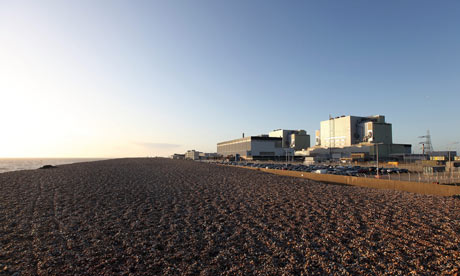
Dungeness nuclear power station in Kent. The Conservatives are in favour of building new nuclear reactors, while the Liberal Democrats are against. Photograph: Dan Kitwood/Getty Images
Nuclear power
This is a major point of disagreement between the two parties. TheConservatives are in favour of building new nuclear reactors, and theLiberal Democrats are against.
Simon Hughes, previously the Liberal Democrats' energy spokesman,has said: "A new generation of nuclear power stations will be a colossal mistake, regardless of where they are built. They are hugely expensive, dangerous and will take too long to build". The Lib Dem leader Nick Clegg reiterated a similar line in the leaders' debates.
The new foreign secretary, William Hague, has said today's document on the terms of the coalition deal will allow the Lib Dems to abstain on certain measures, including nuclear power, which could imply nuclear power will go ahead in the UK, with the Liberal Democrats standing aside on the issue.
Martyn Williams, Friends of the Earth's (FoE) senior parliamentary campaigner, said the high cost made a new fleet of nuclear power stations unlikely. "The Conservatives I've spoken to are clear no public money will go into nuclear, and have even discussed whether that promise should be set down in law. And because the Liberal Democrats will abstain on nuclear, the Conservatives will be a minority government on nuclear".
Lakis Athanasiou, a utilities analyst for Evolution Securities, said an inquiry into nuclear could be the likely outcome if the coalition proves to be weak - which could potentially "derail" the timetable for new nuclear reactors. "The investment decisions on new nuclear by companies do not need to be made until 2012 if we are to have a new nuclear plant before 2020. There will need to be political clarity before the big spends start," he said.
Global climate talks
Both parties are committed to pursuing a global deal to cut greenhouse gas emissions. But their differing enthusiasm for Europe, particularly the Eurosceptic MPs to the right of the Conservative party (not least Hague), may cause rifts over whether to back European negotiating positions.
Carbon cuts
The Liberal Democrats have proposed a 40% cut in carbon emissions by 2020, going beyond the EU's proposed 20%. The Tories didn't set a target in their manifesto, beyond supporting the European target. It's not yet clear what figure the coalition will settle on - the current 20%, proposals from the EU climate commissioner for 30% or the Liberal Democrats' 40%. FoE's Williams said he was worried the subject "doesn't seem to have featured in conversations I've heard around the coalition agreement".
Alex Randall, a spokeman for the Centre for Alternative Technology(CAT) said the Liberal Democrats had been more aggressive in their plans for cutting carbon emissions and that it would be significant if a Lib Dem was appointed as minister for energy and climate change.
Aviation and transport
Both parties oppose Heathrow expansion and agree on the need to expand high-speed rail. Plans for a third runway at Heathrow are now likely to be formally shelved. Williams said there was still a question mark over whether the new government would allow or oppose expansion at other airports. The Lib Dem oppose such expansion but the Tories have left the door open to more airport capacity.
Both parties are keen on electric cars. The Liberal Democrats also proposed swapping vehicle excise duty for a road pricing scheme, though Williams said this now looks unlikely to be a policy adopted by the new government.
Conservation
The Tories have proposed "conservation credits", a scheme under which developers must pay for damage done to the environment that funds for improvements elsewhere. The Lib Dems have called for a new status for "locally important" areas. It is not clear yet which, if either of these policies, will be prioritised.
Renewable energy
Both parties back more investment in "clean energy". The Conservatives have been very clear that they will not back specific low-carbon technologies, but will leave the market to decide. Greg Clark, formerly the shadow climate secretary, wrote recently on environmentguardian.co.uk: "Having set the right incentives, government then needs to realise that it is the creative interactions of millions of investors, producers and consumers that will truly create the low-carbon economy".
The Liberal Democrats have more explicitly backed wind power - using the Guardian's national carbon calculator, they suggested an energy mix featuring 15,000 new wind turbines.
The CAT's Randall said the two parties had distinctly different priorities on low-carbon technologies. "The Conservatives have always favoured a combination of high-tech plus microgeneration - nuclear and carbon capture and storage, plus lots of domestic generation. The Lib Dems have favoured an approach using existing technologies, such as rolling out onshore and offshore wind to a much greater extent, as well as reducing energy demand. It will be interesting to see which approach wins out".
Green homes
Both sides of the coalition have proposed grants and schemes to help householders green their homes. The Conservatives back plans for a"pay as you save" green loan scheme which Labour announced earlier this year and it supports the feed-in tariff for microgenerators of green electricity, which launched in April. The Lib Dems also support the feed-in tariff and in their manifesto proposed a £400 cashback for double glazing, efficient boilers and solar panels. "Will these things feature in first Queen's speech?" Williams asked. "It's a question of whether the coalition prioritise energy and climate. Most of the ministers I've spoken to have been on the environment side and they say it will be, though that doesn't yet prove it will be. Cameron, for example, didn't mention environment in his speech outside of Downing Street last night".
The Guardian
