domingo, 20 de fevereiro de 2011

El Flamengo de Ronaldinho se clasifica para su primera final

El Flamengo brasileño, liderado por Ronaldinho, se clasificó hoy a suprimera final del año, la de la Copa Guanabara del campeonato regional de Río de Janeiro.
El conjunto dirigido por Vanderlei Luxemburgo ganó su pase a la final al vencer al Botafogo por 3-1 en los penaltis, después de haber terminado el tiempo reglamentario empate a un gol.
El primer tanto del partido lo hizo para el Flamengo Ronaldo Angelim, de cabeza tras un centro de Thiago Neves, todavía en la primera mitad.
Tras el descanso, empató el Botafogo gracias a un tiro cruzado del mundialista uruguayo Sebastián Abreu.
En la tanda de penaltis, el guardameta Felipe detuvo dos lanzamientos del Botafogo y Renato Cajá tiró fuera el lanzamiento definitivo.
El rival del Flamengo en la final de la semana que viene será el humilde Boavista, que el sábado se clasificó a expensas del Fluminense, actual campeón de la Liga brasileña.
El campeonato regional de Río de Janeiro está dividido en dos mitades, la primera de ellas es la Copa Guanabara, cuyo campeón se conocerá la semana que viene, y la segunda es la Copa Río.
Si un mismo equipo vence ambas copas, es proclamado campeón carioca y, en caso contrario, los ganadores se juegan el título en una final a doble partido. El Mundo

Los nombres y las voces de la Guerra en Galicia cobran forma

La Ley de Memoria Histórica obliga a las administraciones a elaborar mapas con las localizaciones de las víctimas de la Guerra Civil y de la represión posterior cuyo paradero se ignora. Así, en la Red se pueden encontrar los mapas de Cataluña, Cantabria, Euskadi o Asturias entre otras Comunidades. Galicia está en camino, no porque su Gobierno lo impulse, sino gracias al proyecto interuniversitario 'Nomes e Voces', surgido en 2006, Año de la Memoria Histórica, fruto de un convenio entre las tres universidades gallegas y la Consellería de Cultura de la anterior Xunta.
Un equipo de hasta nueve personas, coordinado por Lourenzo Fernández, se encarga de estudiar la geografía de la represión en Galicia y de descubrir las cifras de la injusticia en una tierra donde la Guerra Civil apenas duró días. Ésta es una clave a tener en cuenta para poder interpretar los datos, que demuestran la existencia de una represión en proporción igual de potente que en otros lugares de España.
El volumen de información tratada es notable, con más de 400.000 páginas documentadas y unas 4.000 imágenes recolectadas. Los investigadores han peinado registros civiles, militares y de prisiones, han realizado casi medio millar de entrevistas y han recogido valiosísima información procedente de familias, desde diarios hasta correspondencia. Un laborioso trabajo que ha permitido cifrar en más de 15.000 los represaliados en Galicia y, de ellos, en al menos 4.240 los asesinados en el período que va de 1936 a 1939.
Las cifras "desmienten la apreciación de que apenas hubo represión en Galicia", sentencia Dionisio Pereira, uno de los coordinadores.
Recopilar toda esta documentación ha sido lo que ha ocupado a los investigadores de 'Nomes e Voces' en estos cuatro años. El análisis de cada pieza del puzzle, la exposición de datos de cada uno de los represaliados y la extracción de unas conclusiones que puedan aprovechar particulares, investigadores, instituciones o asociaciones de Memoria Histórica, todavía están por llegar. Sin embargo, ya se pueden consultar los primeros resultados del laborioso trabajo. El Mundo

Actos violentos en algunas ciudades marroquíes empañan el 'Día de la Dignidad'

Mayores cuotas de democracia y limitar las atribuciones de la monarquía en el país a través de una reforma de la constitución. Son las principales reclamas del Movimiento del 20 de Febrero en Marruecos, que convocó para este domingo manifestaciones enmás de una veintena de ciudades del país y que –según periodistas locales- logró congregar en todo el reino alauí a más de 150.000 personas.
Sus reivindicaciones han quedado en parte desdibujadas por los actos de vandalismo que protagonizaron algunos manifestantes en ciudades como Marraquech, Tánger, Guelmin, Larache o Alhucemas.
Según la periodista independiente Zineb El Rhazoui, Alhucemas ha sido la que ha vivido las escenas más violentas después de que jóvenes manifestantes incendiaran la sede de la wilaya (gobierno local) "porque está en manos del PAM" (Partido Autenticidad y Modernidad), conocido como el del amigo del rey.
Además de quemar también una comisaría, según fuentes de la Asociación Marroquí de Derechos Humanos (AMDH), y de atacar la sede del partido del Istiqlal, el del primer ministro Abás El Fasi.
Los manifestantes, según El Rhazoui, han sido dispersados por las fuerzas del orden con gases lacrimógenos y balas de plástico y algunas calles estaban cortadas con barricadas. También en Larache se han registrado episodios violentos, y en Guelmin, al sur del país, ha sido atacada la residencia del presidente de la comuna.
En Marraquech, una tienda de la española Zara y un McDonalds fueron apedreados. También se quemaron varios vehículos. Y en Tánger fuentes locales también han informado de disturbios aislados.
Las asociaciones de derechos humanos hablan de decenas de heridos y detenidos sin atreverse a dar cifras y ponen en duda que los alborotadores fueran "realmente manifestantes".
Desde el Movimiento del 20 de Febrero han condenado la violencia ejercida en estas ciudades y han señalado con el dedo acusador al Ejecutivo marroquí como instigador de algunos de los incidentes. Mañana está prevista una conferencia de prensa del ministro del Interior, Taieb Cherkaoui, en Rabat sobre las diez de la mañana.

'Habla y muere por tu derecho a la libertad'

A pesar de los episodios violentos, desde el 20 de Febrero insisten en que continuarán con las movilizaciones. Prevén concentraciones diarias en Rabat y otra gran marcha para el próximo fin de semana.
Los organizadores de las protestas reclaman la disolución del Ejecutivo, un gobierno transitorio, una justicia independiente, la exigencia de responsabilidades a los que dilapidan el dinero público, la liberación de presos políticos, la apertura de procesos contra los torturadores y una vida digna donde se respeten los derechos sociales.
"Si hablas, mueres; si callas, también. Por tanto, habla y muere por tu derecho a la libertad", fue el lema de la primera pancarta desplegada en la Plaza de Bab El Had de Rabat, punto de partida de la manifestación en la capital, a las nueve de la mañana.
En las pancartas que sujetaban los manifestantes se leían mensajes como "Himma y Majidi, lárgate", en alusión al fundador del Partido Autencidad y Modernidad (PAM), conocido como el del 'amigo del rey', y al secretario personal de Mohamed VI.
Según cifras de la AMDH, llegaron a congregarse hasta 20.000 manifestantes en el punto álgido de la marcha en la capital hacia el Parlamento, en el centro de Mohamed V, la arteria principal de la ciudad. Una cifra que las autoridades marroquíes rebajaron a dos mil personas.
En el corazón de Rabat han marchado juntos defensores de los derechos humanos, miembros de partidos políticos de izquierdas, sindicalistas, amazighs y los islamistas de Justicia y Espiritualidad, que colaboraron en la manifestación con una nutrida representación. Familias enteras caminaron desde Bab El Had hasta la sede parlamentaria y muchos mirones terminaron uniéndose a las proclamas. El Mundo

Ciudad Juárez sufre unos de los fines de semana más sangrientos con 40 asesinatos

Al menos 40 asesinatos se han cometido desde el viernes en Ciudad Juárez, la ciudad de México más afectada por la violencia vinculada al tráfico de drogas, dijo el domingo el fiscal federal mexicano.
"El viernes hubo un total de veinte asesinatos, el sábado 19 y este domingo uno. Se trata de asesinatos que llevan la firma de los cárteles de la droga, debido a las armas utilizadas y a otros factores", dijo un miembro del servicio de prensa de la Fiscalía federal del Estado de Chihuahua.
"Estas cifras son muy altas. Este es uno de los fines de semana más violentos que hemos conocido en Ciudad Juárez en las últimas semanas", añadió.
El presidente mexicano Felipe Calderón lanzó al asumir el cargo en diciembre de 2006, una campaña contra los cárteles de la droga, que ha movilizado a 50.000 soldados y miles de policías federales. Desde entonces, ha tenido más de 34.600 muertos víctimas de los asentamientos entre los carteles o enfrentamientos con las fuerzas de seguridad.

Envían más militares a la frontera norte

El Ejército de México reforzará su presencia en la frontera norte del país, una de las regiones más azotadas por la violencia del narcotráfico, dijo el sábado el presidente Felipe Calderón durante una ceremonia en honor a las fuerzas armadas.
Los estados de Tamaulipas y Nuevo León, en el noreste de México y fronterizos con Texas, se han convertido en campo de batalla donde cárteles rivales se pelean el control de las rutas de las drogas hacia Estados Unidos.
"He girado instrucciones para que se establezcan en esta región cuatro batallones adicionales a fin de respaldar con elementos e instrumentos eficaces la labor de las fuerza armadas en estos lugares", dijo Calderón en una base militar de Tamaulipas durante el "Día del Ejército".
El mandatario no detalló el número de militares adicionales que reforzarán la frontera. Un batallón militar puede llegar a reunir a unos 500 efectivos.
La violencia ligada al narcotráfico ha dejado más de 34,000 muertos en México, según cifras oficiales, desde que Calderón asumió en diciembre del 2006 y emprendió unos operativos contra los cárteles de la droga en los que actualmente participan decenas de miles de militares y policías federales. El Mundo

El hijo de Gadafi denuncia un 'complot' y advierte del riesgo de 'guerra civil'

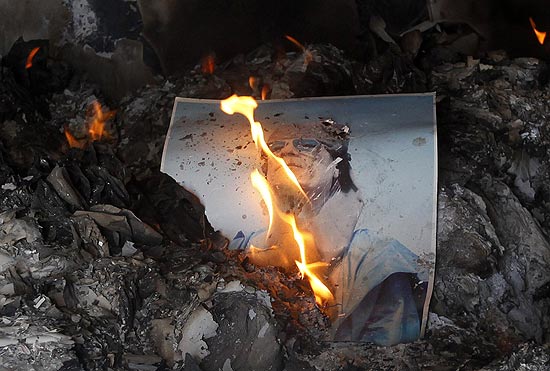
Saif el Islam, el hijo mayor del dictador libio Gadafi, ha comparecido en la televisión estatal para defender que existe un "complot internacional" contra su país a raíz de las revueltas que piden la caída de Gadafi después de 42 años en el poder. Saif cree que esta situación ha puesto a Libia "al borde de una guerra civil" y ha advertido que el pueblo debe elegir entre "una nueva Libia" y un conflicto armado.
Sobre la brutal represión que están sufriendo los manifestantes ha dicho que la prensa extranjera "está manipulando y exagerando la cifra de muertos". Según las últimas informaciones, en base a fuentes sanitarias y de asociaciones de derechos humanos, el balance víctimas supera los 200, la mayoría en la ciudad de Bengasi.
En su alocución Saif ha subrayado que el Ejército jugará un papel esencial en esta revuelta para mantener "la unidad y la estabilidad" de Libia, en clara alusión al rol del Ejército en las revueltas de otros países árabes. "Libia es diferente a los países vecinos, Gadafi no es Mubarak o Ben Alí". "Las tropas están con nuestro líder, ganaremos la batalla de Trípoli", ha dicho. El hijo del dictador libio también ha lanzado otra señal de advertencia a los manifestantes:"Vamos a eliminar todos los elementos de sedición".
El sábado el Gobierno realizó una operación que se saldó con decenas de detenidos extranjeros de origen árabe que trataban de"desestabilizar del país", Saif el Islam ha mantenido este discurso y ha insistido en que hay "elementos extranjeros" que pretenden aumentar la tensión.
Asimismo, Saif ha considerado que la policía y el ejército, dado su pobre entrenamiento, habían cometido "errores" en la represión de las manifestaciones y que tales instituciones habían perdido mucho equipamiento, como tanques y artillería, a manos de civiles.
Por otra parte, Saif ha anunciado que el Congreso Popular General se reunirá este lunes para discutir una agenda "clara" de reformas y adelantó que el Gobierno "incrementará los salarios". El Mundo

Yuan reform pace remains 'unchanged'

Internationalization of Chinese currency has to proceed 'gradually'
PARIS - China's pace in internationalizing its currency remains "unchanged" despite calls on the country to quicken the process, central bank chief Zhou Xiaochuan said.
Yuan internationalization would see the currency play a greater role in world trade and become a globally accepted means of payment.
Zhou, governor of the People's Bank of China, said China insists on a gradual process to internationalize its currency and there is no change in position since his bank announced the policy in 2009.
"The topic is quite complicated and we have no new announcement so far," Zhou told China Daily when he attended the two-day meeting of G20 finance ministers and central bank governors in France, which ended on Saturday.
The meeting agreed on a list of technical indicators to track trade and currency imbalances - caused by some countries spending more while others saved - but left the more tricky questions, concerning when those imbalances actually become dangerous and what to do to mitigate them, for later.
According to the G20 communiqu, indicators will focus on public and private debt, fiscal deficits and private savings rates.
French Finance Minister Christine Lagarde, who chaired the G20 gathering, said agreement "wasn't always simple", but had resulted in a text that was "balanced and demanding as regards its implementation".
Since the global financial crisis, major economies including China and Russia have called for less dependence on the US dollar in international trade and investment, and accelerated steps to promote their own currencies on a global basis.
French President Nicolas Sarkozy came up with an ambitious agenda to reform the de facto US dollar-dominated global monetary regime and wanted to put the Chinese yuan into the basket of global reserve currencies.
However, there was no progress at the two-day conference on the yuan internationalization roadmap though the international community are encouraging the world's second-largest economy to take quicker steps.
Lagarde said reform of the global monetary system will be under the mandate of Germany, which is organizing a team to examine the issue within the G20.
Beijing has shown interest in discussing global monetary reform and Sarkozy said on Friday that China will hold a seminar on the subject at the end of March.
Xia Bin, an academic member of the central bank's monetary policy committee, said the process of yuan internationalization needs to be promoted gradually, but it also depends on greater exchange-rate flexibility for the yuan, and a loosening of capital control.
Louis Kuijs, a senior economist at the World Bank China Office, said earlier that China should not relax capital-inflow controls any time soon, but should wait until the currency regime became more flexible.
A report by HSBC showed that a growing number of domestic and international enterprises are willing to use the yuan for settlement.
In April 2009, the State Council decided to set up pilot projects in five cities to use the yuan for settlements of trade with Hong Kong, Macao and members of the Association of Southeast Asian Nations. It was expanded to 20 provinces and cities about a year later. On Dec 15, the yuan was directly traded abroad for the first time at the Moscow Interbank Currency Exchange, viewed as a milestone on the way to the currency's internationalization.
The central bank also launched a pilot program on Jan 13 to allow domestic companies to use the yuan to settle direct outbound investment for new ventures, mergers, acquisitions and stake purchases overseas.
In addition to quickening the process of renminbi internationalization, China has also faced mounting external pressure to appreciate its currency.
Analysts said deciding the currency's value will not be a simple task.
"So we will keep the yuan exchange rate basically stable whilst improving the flexibility of the currency regime," Zhou said.
The yuan exchange rate against the US dollar was 6.5781 on Friday, a 17-year record high. The currency has appreciated against the US dollar by almost 4 percent since June.
Wang Xiaotian contributed to this story. China Daily

Anti-Government Protests Spread in North Africa

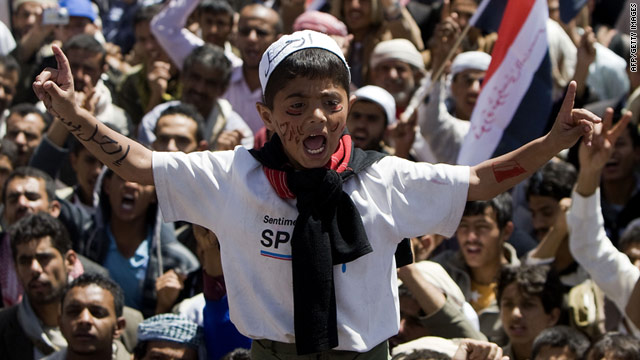
Thousands of anti-government protesters took to the streets of Morocco and Tunisia Sunday, while there are reports of 173 people killed during clashes with security forces in eastern Libya. 

Morocco was the latest Arab country with anti-government protests. Journalists report at least 2,000 people marched in the capital, Rabat, and other cities, calling for a new constitution, more economic opportunities, a crackdown on corruption, and for King Mohammed to cede some of his powers. 

The protest sounds in Rabat, captured in a YouTube video, could not be independently verified. But news services report that unlike Saturday's anti-government protests in neighboring Algeria, Moroccan police kept a low profile. 

By contrast, Libyan forces have reportedly cracked down brutally against anti-government protesters in Benghazi and other parts of eastern Libya. Human Rights Watch estimates more than 170 people have been killed. Others like Benghazi doctor Soheil Al Atrach, who was interviewed by Radio France Internationale, say about 200 people were killed in the area.

Dr. Al Atrach says about 100 bodies have been brought into the Benghazi hospital where he works. He estimates the crackdown by Libyan authorities have left another 100 dead in surrounding towns and about 600 to 700 people injured. He describes the scene at his hospital as a 'real butchery.'

But journalists have had a hard time independently verifying the events and casualty toll in Libya, because of controls on information.

The protests are part of larger calls for democracy and regime change that have resonated across the Arab world, starting with mass protests in Tunisia and Egypt that toppled the leaders of both countries. 

Thousands of demonstrators also poured into the streets of Tunisia's capital, demanding the resignation of the interim government, which has been criticized for being slow to address economic and security concerns - and for its ties to the former regime of strongman Zine El Abidine Ben Ali. The caretaker government has promised elections within six months, but has yet to set a date.   

In Yemen, anti-government protests continued for the 11th straight day, with university students demonstrating in the capital, Sanaa. VOA News

Man charged with kicking off the gang war

Former gang member provides crucial information for police
A 24-year-old affiliate of Hells Angels support gang AK81 has been charged with the 2008 murder that is said to have started off the gang wars in Copenhagen.
Known to the media only as MF, the man is charged with shooting 19-year-old Osman Nuri Dogan with an AK47 military rifle.
The alleged incident occurred during a drive-by shooting on 14 August 2008 in front of a pizzeria in the northwest suburb of Tingbjerg. It is widely regarded as the incident that sparked the current gang conflict, which has seen several shooting incidents in the area in recent weeks.
MF is also charged with possession of an illegal firearm as well as having arranged the murder with other “unidentified persons”.
The man was on the police radar as early as two days after the murder, but due to a lack of evidence, he was released. Last summer, police again pressed charges against him while he was serving an 18-month sentence for a violent attack.
The police’s ongoing attempts to get MF convicted of the murder of Dogan have been helped well along by a defected AK81 member known as MFP, who himself is serving a 12-year sentence for a series of attempted murders. MFP has also been a decisive factor in a case against 13 people with connections to Hells Angels and AK81, who are charged with a range of attempted murders. The Copenhagen Post

American who sparked diplomatic crisis over Lahore shooting was CIA spy


The American who shot dead two men in Lahore, triggering a diplomatic crisis between Pakistan and the US, is a CIA agent who was on assignment at the time.
Raymond Davis has been the subject of widespread speculation since he opened fire with a semi-automatic Glock pistol on the two men who had pulled up in front of his car at a red light on 25 January.
Pakistani authorities charged him with murder, but the Obama administration has insisted he is an "administrative and technical official" attached to its Lahore consulate and has diplomatic immunity.
Based on interviews in the US and Pakistan, the Guardian can confirm that the 36-year-old former special forces soldier is employed by the CIA. "It's beyond a shadow of a doubt," said a senior Pakistani intelligence official. The revelation may complicate American efforts to free Davis, who insists he was acting in self-defence against a pair of suspected robbers, who were both carrying guns.
Pakistani prosecutors accuse the spy of excessive force, saying he fired 10 shots and got out of his car to shoot one man twice in the back as he fled. The man's body was found 30 feet from his motorbike.
"It went way beyond what we define as self-defence. It was not commensurate with the threat," a senior police official involved in the case told the Guardian.
The Pakistani government is aware of Davis's CIA status yet has kept quiet in the face of immense American pressure to free him under the Vienna convention. Last week President Barack Obama described Davis as "our diplomat" and dispatched his chief diplomatic troubleshooter, Senator John Kerry, to Islamabad. Kerry returned home empty-handed.
Many Pakistanis are outraged at the idea of an armed American rampaging through their second-largest city. Analysts have warned of Egyptian-style protests if Davis is released. The government, fearful of a backlash, says it needs until 14 March to decide whether Davis enjoys immunity.
A third man was crushed by an American vehicle as it rushed to Davis's aid. Pakistani officials believe its occupants were CIA because they came from the house where Davis lived and were armed.
The US refused Pakistani demands to interrogate the two men and on Sunday a senior Pakistani intelligence official said they had left the country. "They have flown the coop, they are already in America," he said.
ABC News reported that the men had the same diplomatic visas as Davis. It is not unusual for US intelligence officers, like their counterparts round the world, to carry diplomatic passports.
The US has accused Pakistan of illegally detaining him and riding roughshod over international treaties. Angry politicians have proposed slashing Islamabad's $1.5bn (£900m) annual aid.
But Washington's case is hobbled by its resounding silence on Davis's role. He served in the US special forces for 10 years before leaving in 2003 to become a security contractor. A senior Pakistani official said he believed Davis had worked with Xe, the firm formerly known as Blackwater.
Pakistani suspicions about Davis's role were stoked by the equipment police confiscated from his car: an unlicensed pistol, a long-range radio, a GPS device, an infrared torch and a camera with pictures of buildings around Lahore.
"This is not the work of a diplomat. He was doing espionage and surveillance activities," said the Punjab law minister, Rana Sanaullah, adding he had "confirmation" that Davis was a CIA employee.
A number of US media outlets learned about Davis's CIA role but have kept it under wraps at the request of the Obama administration. A Colorado television station, 9NEWS, made a connection after speaking to Davis's wife. She referred its inquiries to a number in Washington which turned out to be the CIA. The station removed the CIA reference from its website at the request of the US government.
Some reports, quoting Pakistani intelligence officials, have suggested that the men Davis killed, Faizan Haider, 21, and Muhammad Faheem, 19, were agents of Pakistan's Inter-Services Intelligence spy agency (ISI) and had orders to shadow Davis because he crossed a "red line".
A senior police official confirmed US claims that the men were petty thieves – investigators found stolen mobiles, foreign currency and weapons on them – but did not rule out an intelligence link.
A senior ISI official denied the dead men worked for the spy agency but admitted the CIA relationship had been damaged. "We are a sovereign country and if they want to work with us, they need to develop a trusting relationship on the basis of equality. Being arrogant and demanding is not the way to do it," he said.
Tensions between the spy agencies have been growing. The CIA Islamabad station chief was forced to leave in December after being named in a civil lawsuit. The ISI was angered when its chief, General Shuja Pasha, was named in a New York lawsuit related to the 2008 Mumbai attacks.
Although the two spy services co-operate in the CIA's drone campaign along the Afghan border, there has not been a drone strike since 23 January – the longest lull since June 2009. Experts are unsure whether both events are linked.
Davis awaits his fate in Kot Lakhpat jail in Lahore. Pakistani officials say they have taken exceptional measures to ensure his safety, including ringing the prison with paramilitary Punjab Rangers. The law minister, Sanaullah, said Davis was in a "high security zone" and was receiving food from visitors from the US consulate.
Sanaullah said 140 foreigners were in the facility, many on drug charges. Press reports have speculated that the authorities worry the US could try to spring Davis in a "Hollywood-style sting". "All measures for his security have been taken," said the ISI official. "He's as safe as can be". The Guardian

Concerns over Bulgarians Safety in Benghazi Run High

The safety of hundreds of Bulgarians in the Libyan city of Benghazi might be at risk after troops launched a brutal crackdown on protesters, leading to many casualties, analysts in Sofia have warned.
"I am afraid that a big part of the Bulgarian medics, working in Libya, are located inBenghazi. This is a city, whose citizens associate every Bulgarian national with the AIDS trial against the Bulgarian medics and Col Muammar Gaddafi," Kiriyak Tsonev, the first specialist in Bulgarian diplomacy on the Arab world, told Darik radio.
"The worst case scenario is for the Bulgarians there to become targets of the hatred Libyans felt for the Bulgarians medics in the HIV trial," he added, referring to the Bulgarians charged with deliberately infecting more than 400 children with the HIV virus, who were subsequently transferred to Bulgaria and pardoned.
Asked whether Bulgarians nationals in Benghazi should be repatriated, the expert recommended that the Foreign Affairs Ministry follow very carefully the development of the situation there and take decisions on daily basis.
More than 200 people are known to have died in Benghazi and another 900 have been injured, according to figures that emerged on Sunday.
The most bloody attacks were reported over the weekend, when a funeral procession was said to have come under machine-gun and heavy weapons fire.
One doctor, speaking amid the sound of fresh gunfire on Sunday, told the BBC that "a real massacre" had happened.
Human Rights Watch says at least 173 people have been killed in Libya since demonstrations began on Wednesday.
Benghazi, the country's second city, has been a leading focus of protests against four decades of rule by Col Muammar Gaddafi.
The city is also the scene, where the tragedy of six Bulgarian medics, who spent more than eight years jailed in Libya in a travesty HIV trial, unfolded.
The medics were sentenced to death in Libya on charges of deliberately infecting more than 400 children with the HIV virus, but the involvement of the Sarkozy couple in the final stages of the talks secured their release and subsequent pardoning in Sofia.
Tripoli protested against the pardoning of the medics, claiming it breaches the prisoner transfer agreement signed in 1984, based on which the medics were repatriated. The country threatened to review its ties with Bulgaria.
Libya is one of several countries in the region to have seen pro-democracy campaigns since the fall of long-time Tunisian President Zine El Abidine Ben Ali in January. Egypt's Hosni Mubarak was forced from power on 11 February.
The Crisis Center at the Bulgarian Ministry of Foreign Affairs issued over the weekend recommendations for Bulgarian citizens to limit or refrain from traveling to Libya, North Africa and Yemen, amid violent protests across the region.
The sternest warning is for Yemen, where protests are gathering force. The Foreign Ministry advises nationals to refrain from travelling to the country.
For Tunisia and Libya, the Crisis Center recommends Bulgarians who are present there to stay at home and avoid public places, although it notes that the cituation in Tunisia is getting calmer.
The Ministry specifically warned citizens to desist from travelling to eastern Libya, where the most intense tensions are underway. Novinite

Tunisia seeks Ben Ali extradition from Saudi Arabia


Tunisia is formally requesting the extradition of ex-President Zine al-Abidine Ben Ali from Saudi Arabia, where he fled last month.
Mr Ben Ali flew to Saudi Arabia on 14 January after 23 years in power, after being toppled by weeks of protests.
The 74-year-old former leader is reportedly very ill in hospital after suffering a stroke.
Tunisia now has an interim government which is preparing the country for national elections.
That government is now seeking to put Mr Ben Ali on trial on charges linked to the deaths of protesters during the uprising against his rule.
A statement from the foreign ministry in Tunis accused the former leader of involvement in "serious crimes" aimed at "sowing discord between the citizens of the same country by pushing them to kill one another", the AFP news agency reported.
As well as asking Riyadh to extradite Mr Ben Ali, Tunisia is seeking information on the former president's current health, including confirmation he is still alive.
Various recent reports have suggested that he is "gravely ill".
Although Mr Ben Ali was credited with creating political stability and strong economic growth, critics say he disregarded human rights and democratic values - claims he denies.
The government's extradition request comes as demonstrations continue to mount in Tunisia.
On Sunday thousands massed in Tunis demanding changes to the interim government, which many accuse of retaining links to the disgraced former regime.
Interim Prime Minister Mohammed Ghannouchi has retained his position despite serving under Mr Ben Ali from 1999.
"We are against Ghannouchi's government because our revolution has led to nothing with Ghannouchi. This is Ben Ali's team and it has changed nothing," teacher Samia Mahfoudh, 50, told the AFP news agency. BBC News

Guatemala football club Xinabajul executive shot dead


The vice-president of a Guatemalan football club has been shot dead, after receiving death threats over the team's poor performance.
Police said Carlos Noe Gomez of Deportivo Xinabajul was killed by two men who were waiting for him as he left a team meeting.
Xinabajul, based in the northern town of Huehuetenango, are at the bottom of Guatemala's national league.
Police are focusing on threats Gomez said he received several weeks ago.
National police spokesman Donald Gonzalez said Gomez was attacked late Friday. Guatemala's national league condemned the killing and called for a "serious and profound" investigation.
The killing follows that of Carlos Mercedes Vasquez, from the first-division club Malacateco.
He was found murdered in November last year after being kidnapped.
The football star's dismembered body was found dumped in five plastic bags with a note accusing him of "messing with the women of others".
A suspect in the murder, Elmer Aroldo Zelada Galdamez, was arrested but freed in December by a group of armed men who stormed the prison in Malaceteco where he was being held. BBC News

Tseng completes hat-trick of LPGA wins


(CNN) -- World No.1 Yani Tseng continued her current dominance of women's golf as she coasted to victory in the LPGA Thailand tournament at the Siam Country Club in Chonburi.
Tseng shot a final round 66 giving her a winning margin of five shots over America's Michelle Wie who could only manage a fourth round 70.
Korea's In-Kyung Kim, who was tied for second with Wie after round three, finished in third place.
The win is Tseng's third in as many weeks on the LPGA Tour, but the 22-year-old was modest in victory. CNN

Teen bull rider dies in Florida


(CNN) -- A teen bull rider was kicked at least once in the chest after she was thrown and later died, Florida authorities said Saturday.
Brooke Ann Coats, 16, died from injuries Friday evening at Tampa General Hospital, according to the Hillsborough County Sheriff's Office.
Coats was able to walk out of the ring after the 8:30 p.m. incident at 301 Rodeo on U.S. 301S, east of Tampa, the office said in a statement. She experienced difficulty breathing and collapsed.
An off-duty paramedic rendered aid until Coats was taken to the hospital, where she died during surgery, officials said.
An investigation continues, but detectives do not suspect foul play. CNN

Even by Juarez standards, a deadly 72 hours


(CNN) -- Fifty-three people were killed in a 72-hour span in Ciudad Juarez, Mexico, making it one of the deadliest three-day periods in recent memory, state attorney general's office spokesman Arturo Sandoval told CNN Sunday.
Among the dead were four police officers from three different agencies, Sandoval said.
"This is the worst violence we've seen this year," he said, referring to the three days from Thursday through Saturday.
The bloodshed started on Thursday with 14 people killed, including a municipal police officer.
Friday was the most violent day, leaving 20 people dead. A municipal police officer was killed by an assassin who belonged to a band of carjackers. Hours later, a state police investigator was executed on his drive home.
On Saturday, a highway police officer was killed by a driver who confronted the patrolman after the officer gave him a ticket. The officer was shot 10 times at close range in the middle of the afternoon. In all, 19 people were killed that day in separate shootings throughout the city.
Juarez is one of Mexico's deadliest cities and an epicenter of drug cartel violence. The Juarez cartel and the Sinaloa cartel are fighting a bloody turf war in the region for lucrative smuggling routes, and for drug-dealing territory in the city.
The sudden spike in violence left the city morgue overwhelmed. There were issues with where to store the bodies.
In light of the violence, Juarez Mayor Hector "Teto" Murguia is expected to name a new municipal police chief on Monday, local newspapers reported.
Municipal police spokesman Adrian Sanchez told CNN he has read those reports, but that the police department has no official confirmation that a new chief will be appointed.
"At this time we continue serving our current boss until we are given new orders," Sanchez said.
In the first 40 days of 2011, Juarez is averaging eight homicides per day, Sandoval said. Also, in February, at least 24 women have been killed in 20 days. CNN

luishipolito@outlook.com

Carregando...